Stuff to store, stuff to treasure?

My family’s brand of crazy is less of the run-around-the-house screaming variety and more of the subtle wear-you-down-until-you-snap variety.  Like most families, we take turns in the crazy seat.  We find it spreads the love around a bit more that way.

My Dad has been in and out of work for a few months now and after a few experiments finally decided to do what everyone has been smartly telling him to do for years: start his own company.  A few days before Christmas, he did this.  Now he is in the game of stop and go as details like insurance, office space, and equipment all get sorted out.  There is no lease on office space quite yet, which means my Dad is spending a considerable amount of time at home… in the crazy seat.  This is figurative, of course, because my Dad is a machine.  The man cannot sit still for a moment.  You know how Kate was so active during her first year that her weight dropped dramatically and we had a hundred tests and sleepless nights and worried, worried, worried… until finally no one could find anything wrong and was left us with the conclusion that she was burning several hundred calories a day simply because she was So Unbelievably Active?  Well, turns out Kate did get it from somewhere.

So in his attempts to ready my Mom for her turn on the crazy seat, Dad decided to empty the attic.  This is a HUGE endeavor.  The attic is actually includes normal attic space in the eves of their house, plus an entire room they left unfinished so they’d have more attic space.  Our entire house could fit in there, with room for the outbuilding.  Not that we are being critical: Paul and I have used this to considerable advantage.  We storage much of his pinball manuals and equipment there, as well as several boxes of non-essential ‘stuff’ that came from Michigan that we’ve never retrieved (things like high school yearbooks, old framed posters, and bins of artwork I did in elementary school).  There are also several dozen boxes of things from my Grandma Betty and Grandma Alice (my Mom and Dad’s mothers, respectively).

Dad decided he was ready to purge.  The boxes were waiting for us when we arrived on Friday afternoon.

Our stuff is one thing.  That is easier to identify both practically and emotionally.  But the things from my Grandmothers, I’m struggling to place.  Am I okay with letting these go, these little ties to forgotten memories?  Plus, so much of it is just unique and kitschy and cute.  And some of it involves birds and/or swans, on which I have an addiction that runs so deep I’d trade you my last bar of dark chocolate for a one-of-a-kind tchotsky with little other purpose over dust collection.

But really, milk glass is so creamy and wholesome!  And those bumps feel cool and interesting.  Also?  I have glass plates that are similar (with bumps along the edges) that were also my Grandma’s.  (Okay, I admit it.  My cabinets reflect that I’ve been led down this path before.)

See this little teacup?  It was my great-grandmother’s and now it’s all alone.  Just one tiny cup and saucer.  It’s too small for two lumps and would have a tough time taking cream.  Perfect, really, for the dainty shot of gin.  Isn’t that what tea parties are about these days, anyway?

I can’t decide which of these I like more.  Instead of laying my earrings on the bathroom counter, wouldn’t they look cute in one of these?  (Please no smart comments about the jewelry looking best where it goes… in a drawer… I’m trying to be realistic here.)

Did you know milk glass GLOWS?  Sure, it’s glowing on the bottom, but how cool!  My Mom told me that Grandma used this on the kitchen table as a place to put receipts and keys.  In other words, if I took it home and Kate used it to mix plaster of paris, I wouldn’t be completely disowned.

Ah, but this!  Your heart will just break.  I have another for holding my rings while I do dishes.  But not quite as adorable as this little sweetie…

Little touches of my Grandmas.  Definitely worth finding a place for at home… and then packing up and evacuating with once a year.  Right?

Art & Photography
Family Stories
Mi Familia

Comments (4)

Permalink

Photohunt: Aftermath

Aftermath. That’s the Photohunt theme for this week.  Do I have pictures of aftermath?  Does the Pope wear a funny hat?

I thought about just skipping the week all together.  I’m not really in the mood to think about aftermath.  But here’s one.  Of many.

Also, I’m linking to pictures, and more, of aftermath.  They just scratch the surface.

Both the ugly.

And the recovery.

Art & Photography
Recovery and Rebirth

Comments (6)

Permalink

On Running

This heaviness is in my heart and head.  These things (past, present, future?) and more…are things I just can’t shake.  Really, they are the kinds of things one shouldn’t shake away: we should put our faces right up to them, shine that mirror onto our natures, and teach each other better ways.  Which is why I am embarrassed that at times like these, my instinct is to grab my family and run.  My worst weaknesses, fear and sorrow.  Sometimes I just can’t find a silver lining.  Sometimes I can’t help but see the worst.

Jaded, cynical, and rational, I cannot believe in a benevolent creator that loves the people of earth, so I need to believe in a world of people who love each other.  It’s all I’ve got.  It’s all I am.

Which is maybe why, tonight, when Will picked this book to read at bedtime, I finished it with great difficulty.  Not the hormonal sensitivities of a younger woman feeling nostalgic over a cheesy movie’s surprise patriotism — but the hitching breath and breaking voice of an adult who doesn’t know how to explain how ugly things happen in a world her children are being taught to love.

From “Is There Really a Human Race?”

And why do we do it, this zillion-yard dash?

If we don’t help each other, we’re all going to… crash.

Sometimes it’s better not to go fast.

There are beautiful sights to be seen when you’re last.

Shouldn’t it be that you just try your best?

And that’s more important than beating the rest?

Shouldn’t it be looking back at the end

that you judge your own race by the help that you lend?

So, take what’s inside you and make big, bold choices.

And for those who can’t speak for themselves, use bold voices.

And make friends and love well,

bring art to this place.

And make the world better

for the whole human race.


Family Life in NOLA
Issues
Recovery and Rebirth

Comments (4)

Permalink

Birthday wishes, three ways.

Will: “Mommy, can we just skip your birthday and go to mine because I want to be 6 and I want you to NEVER BE ANY OLDER THAN RIGHT NOW.”

—

Kate: (on the actual birthday) “It’s CHRISTMAS!  Yeah, Santa!”

Kate: (on day after birthday) “It’s your birthday, Mommy!  Santa’s coming!”

—

Me: (to Paul) “It’s my birthday, are you going to pamper me today?”

Paul: “Sure.  But I don’t think we have any in your size.”

Uncategorized

Comments (4)

Permalink

Counting birthdays in hex is totally the way to go.

I’m 21 today!!  (In hex.)  Good thing, too, because I recently heard this exchange among my Schweitzer group:

“What did he look like?”

“Oh, you know… tall, brown hair, middle age… like, in his late 20s/early 30s.”

Phew!  Good to know hex puts me squarely in the early age category!  Although I am young and so thrilled to finally be able to buy booze, I am going for a low-key celebration.  So for all you peeps ready to take me out drinking on the town, here are some things I won’t be doing today, on my birthday:

— I will not be putting gifts in my children’s shoes in celebration of Epiphany (although the cat may leave one in mine.)

— I will not see the parade in the French Quarter to kick off the start of Carnival Season.

— I will not be taken out to a Fancy Dinner (although I may serve a mediocre one to my family.  Readers are encouraged to send easy recipes to this culinary-challenged woman, with the understanding that I can barely boil water.)

— I will not be rudely awoken from an afternoon nap.

— I will not be lavished seduced with presents (although I will probably be given a hidden gift from my mother-in-law and sung to by my parents).

— Our household will not relocate to Disney-developed Celebration, Florida, even though Casa Latino, one of the country’s largest Hispanic and minority owned real estate offices, is moving there from New England (how strange is that?!)

— I will not be bothered if I decide to eat frozen cookie dough in lieu of not having Fancy Dinner.

— It will not be judged careless if I decide to catch up on random websites and enjoy things like these portraits, these lights, these light cords, these knitted curiosities, and these paper illustrations.

— No one will bother me if I want to play Momma-razzi all night with my camera.  Smile, kids!

Thank you for all the birthday well-wishes!

—

UPDATE: A big whoops for forgetting the hat tip to laloca, for pointing out the knitting curiosities.  I’d say that they made my day, but considering how many people I’ve shown them to and how it’s still up in my browser, I think making my week is much more appropriate.  I guess I’m in a bit of a twisted funk??

Family Photos
Mi Familia
Special Family Moments

Comments (18)

Permalink

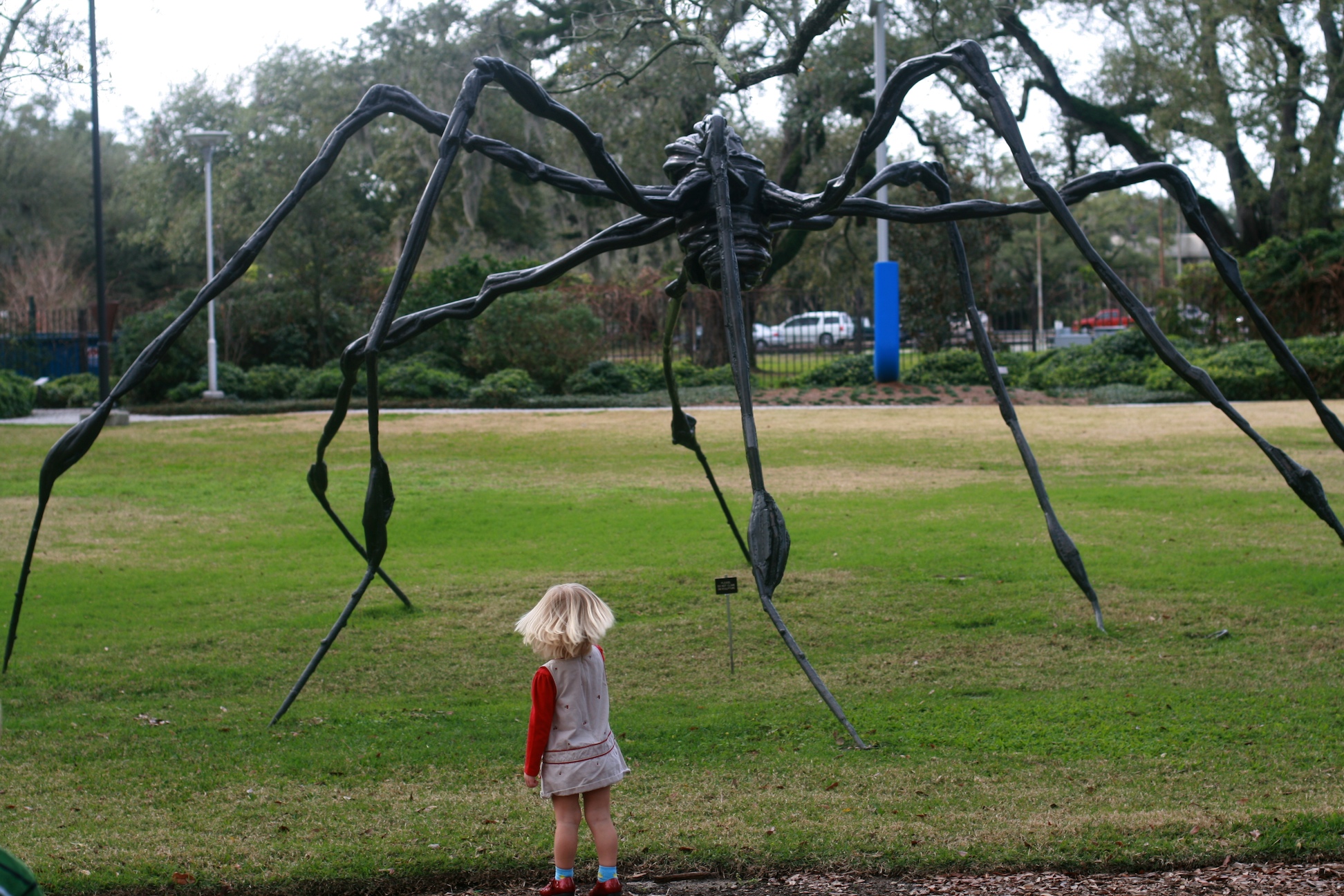
Frodo would totally freak.

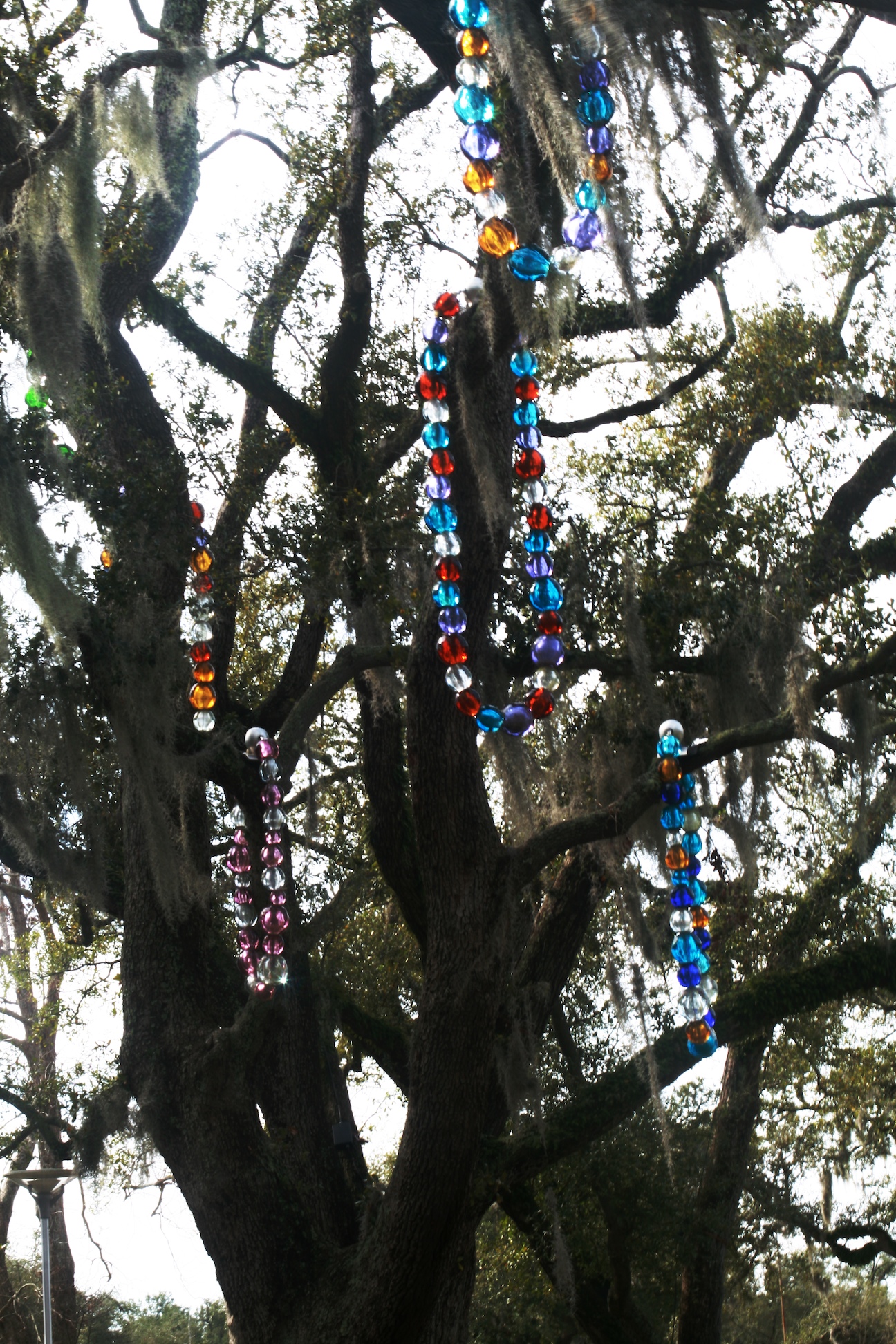
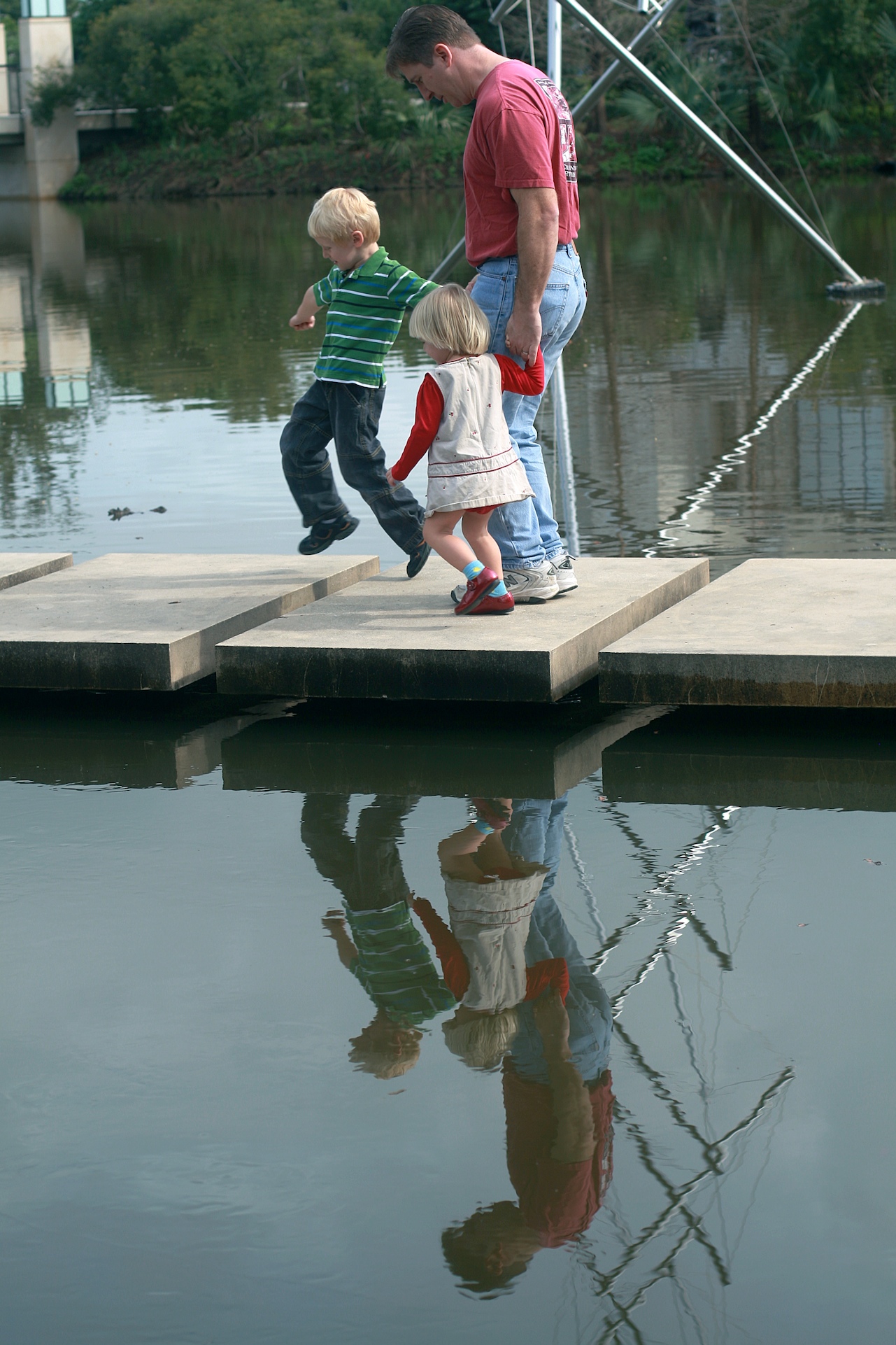
Sunday morning stroll through City Park’s NOMA Sculpture Garden.

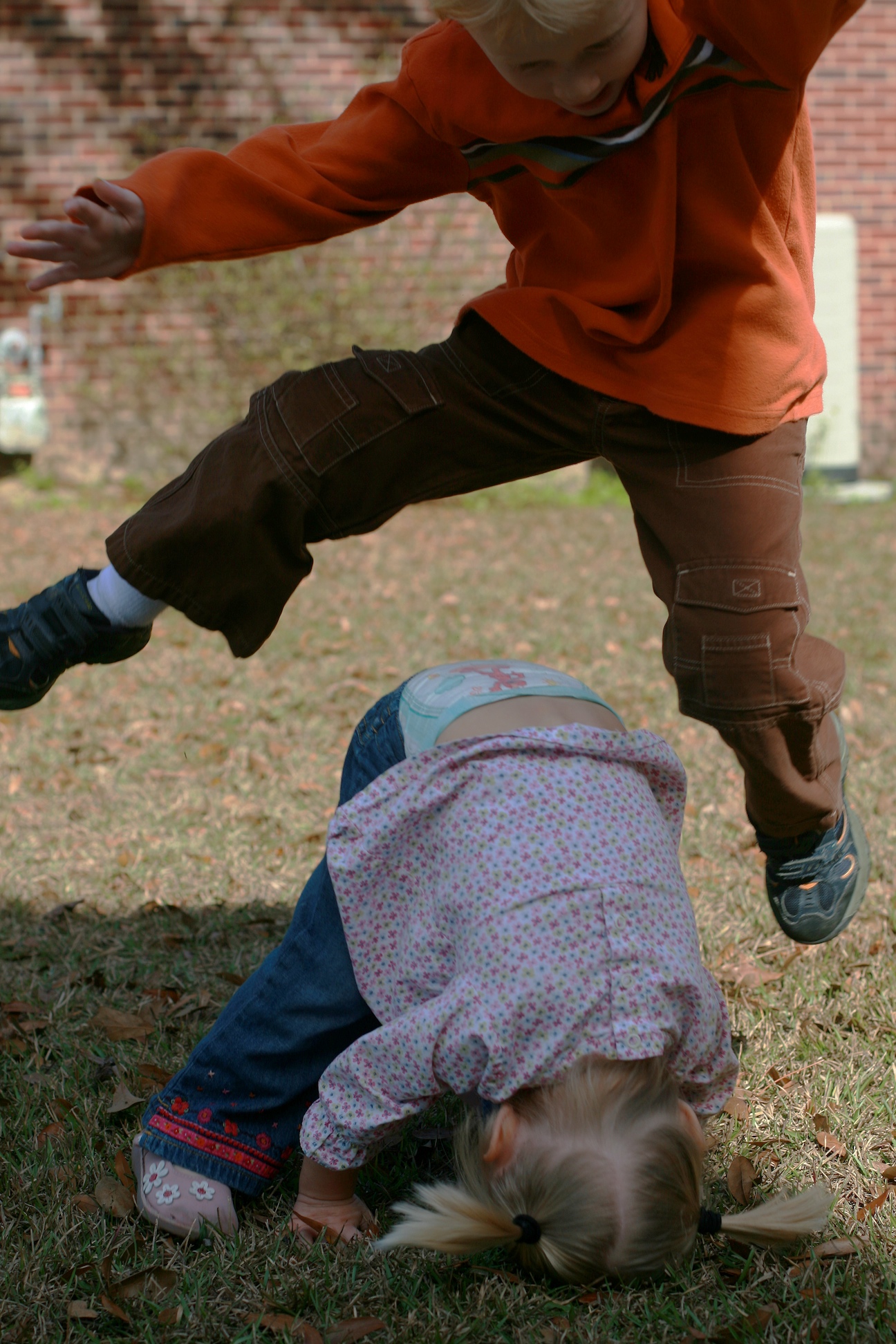
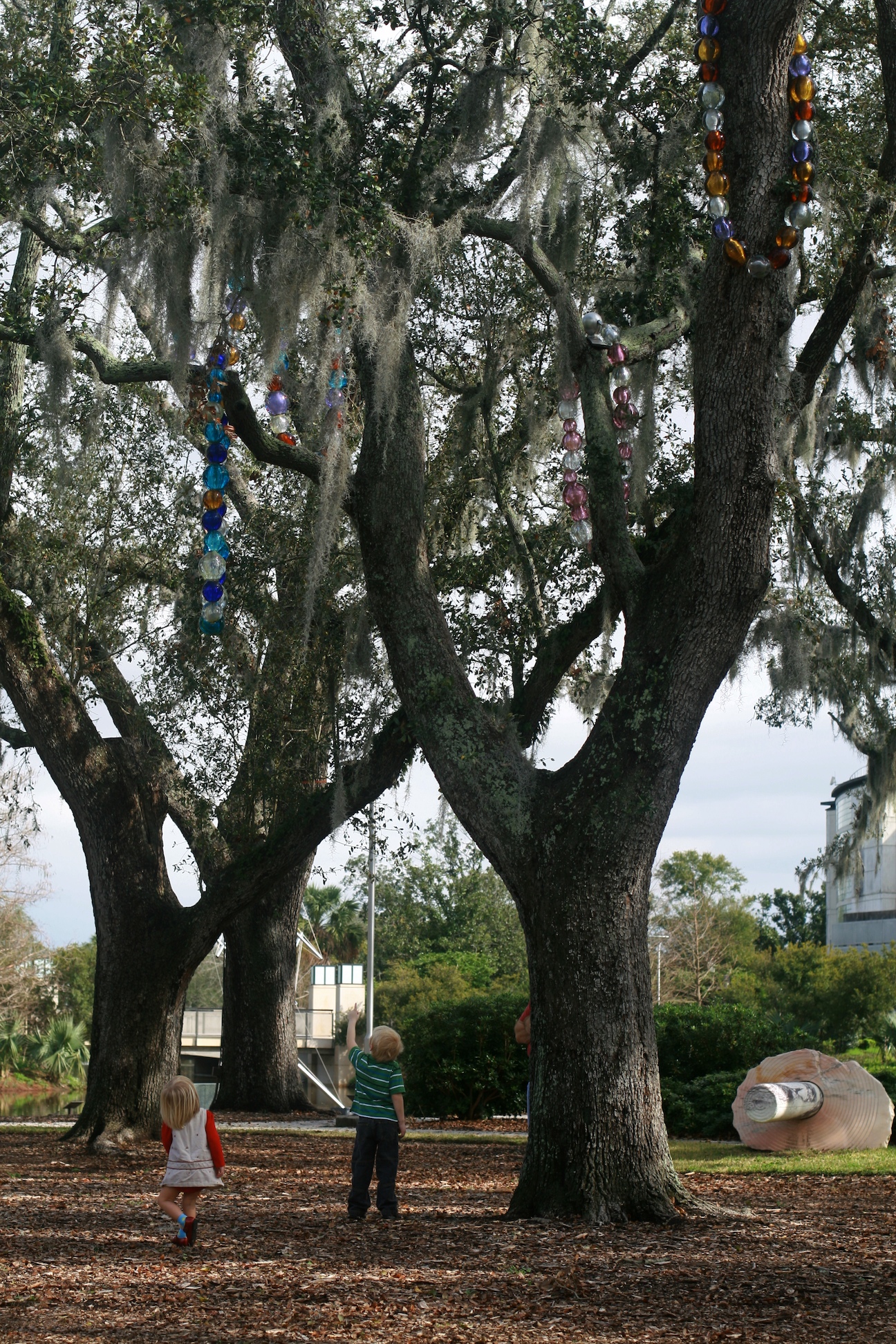
Or, not so much stroll as children running madly through the Spanish moss and spider legs.

And trying, in vain of course, to catch the ultimate of all throws…

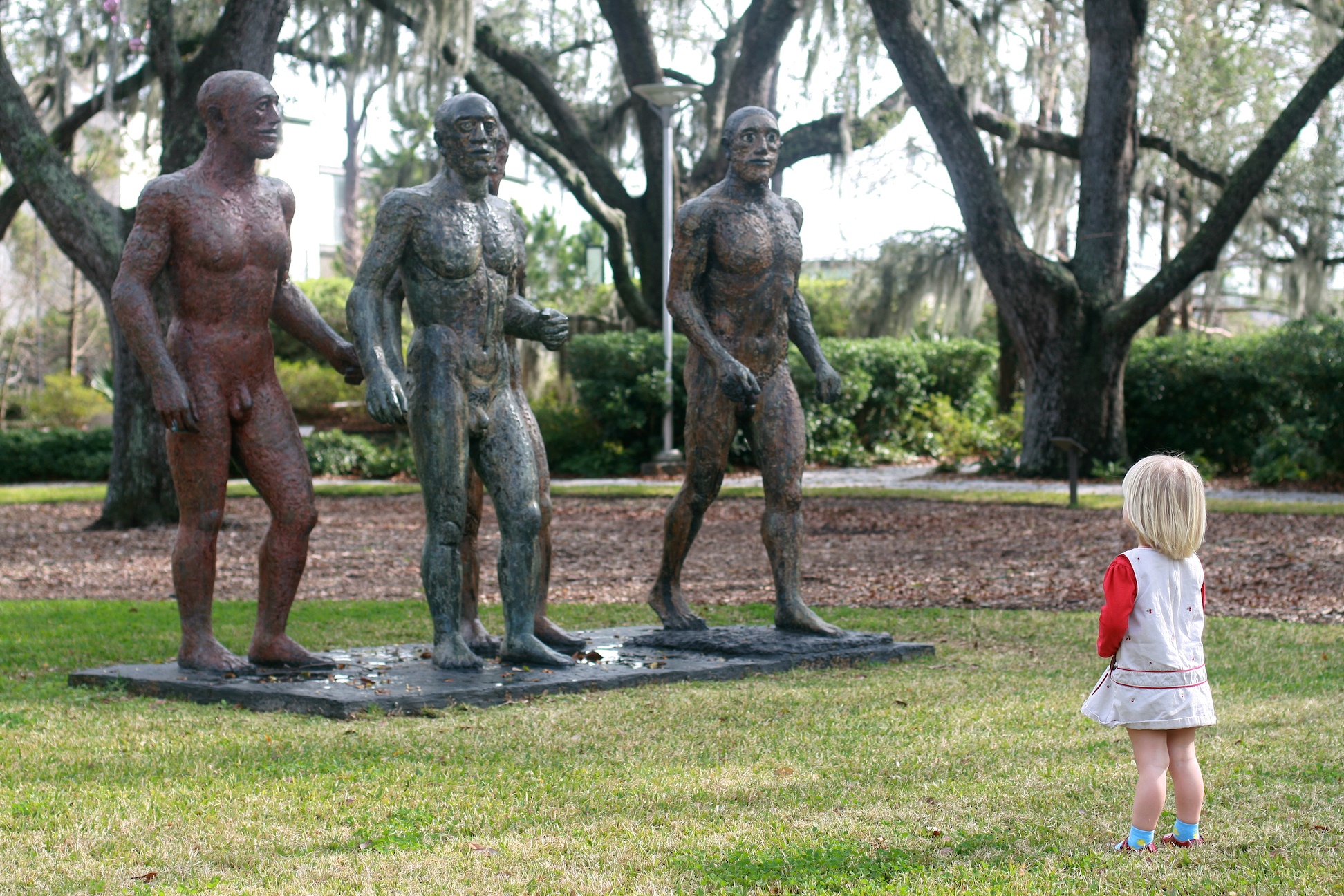
Kate stood here for 3 Solid Minutes.  Remarkable, because she has never stood in one place for even a quarter of that time frame, anywhere.  We had to actually wave our hands in front of her face to bring her back.

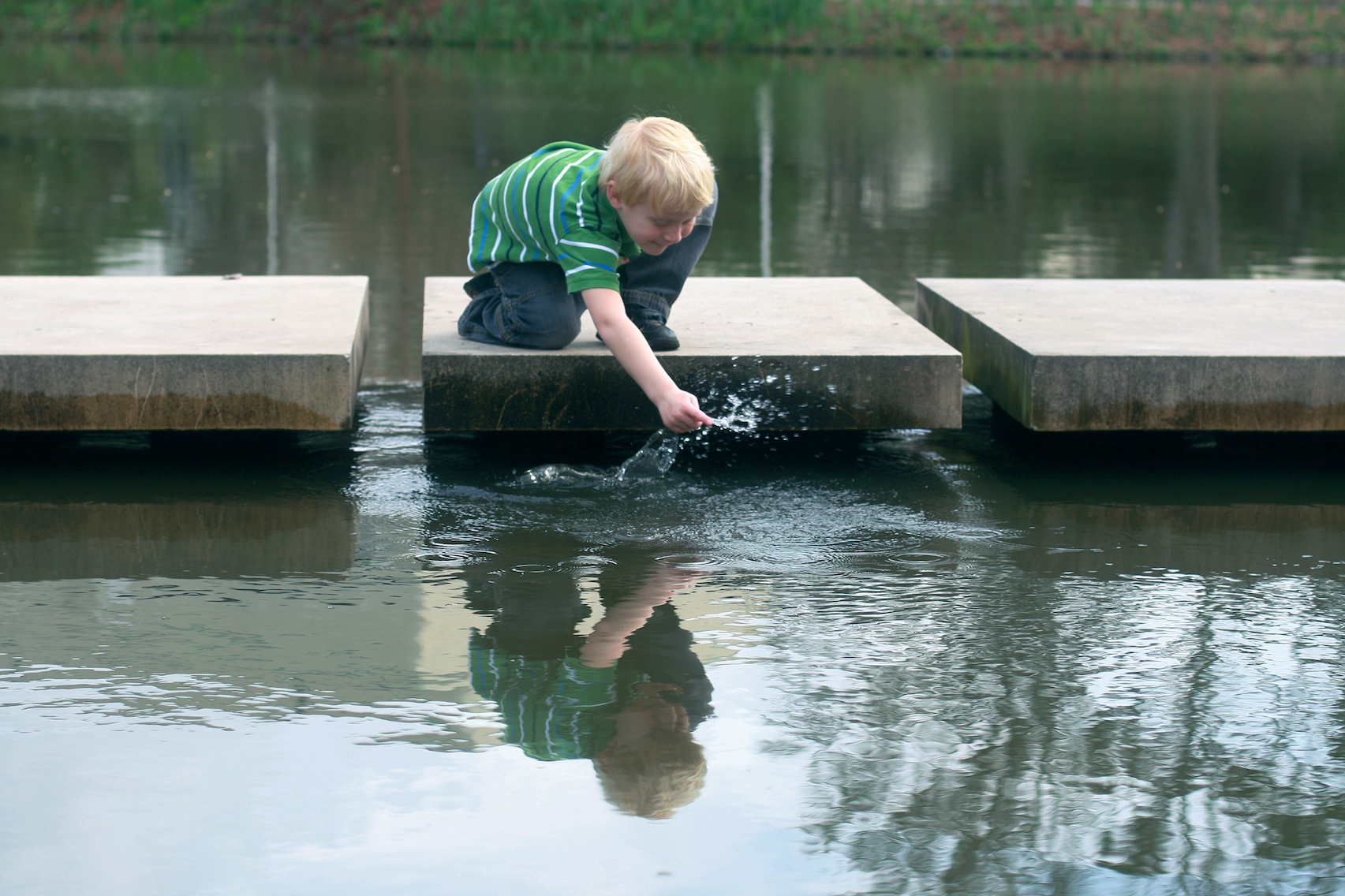
Dad!  I can’t reach!

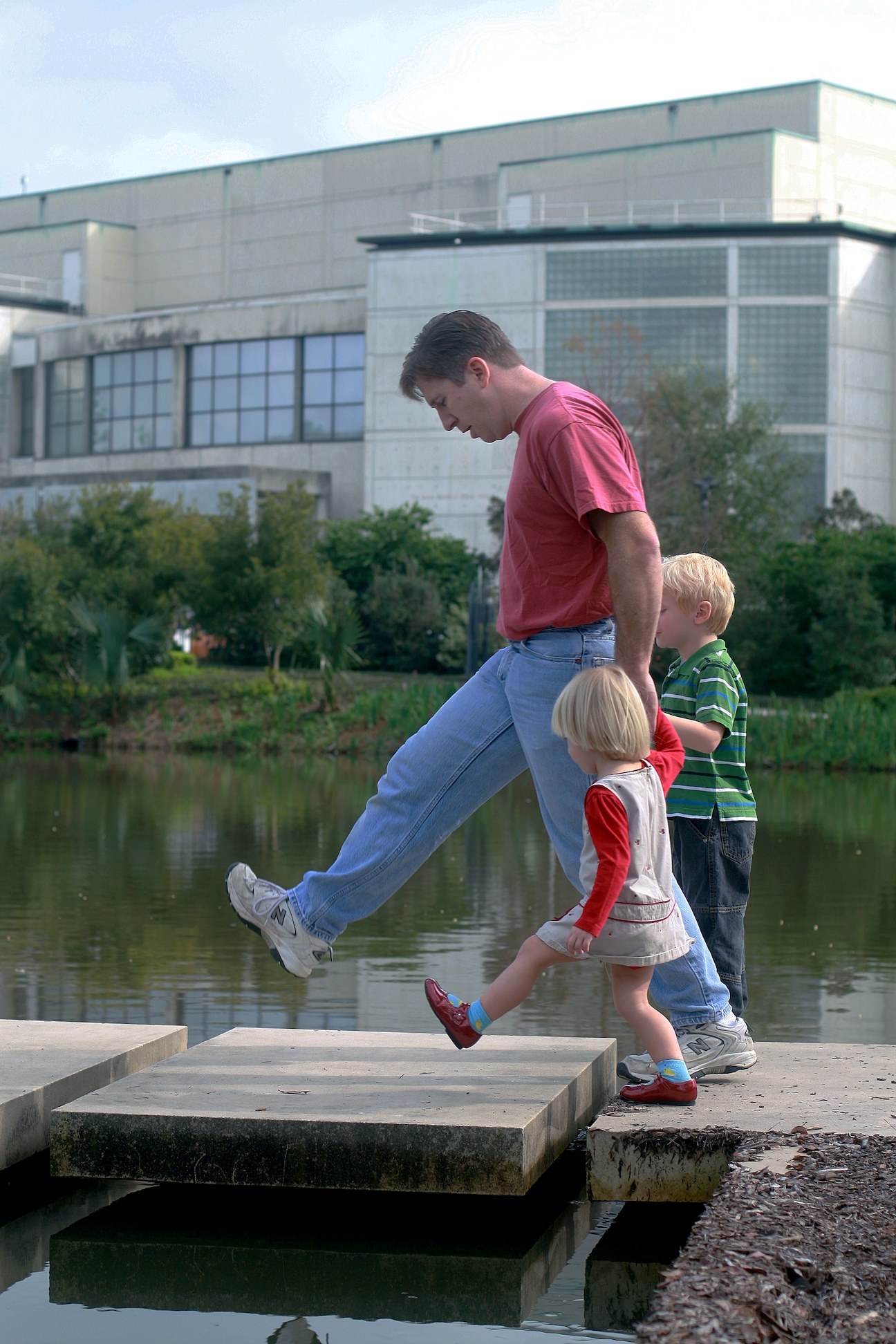
Crossing the great divide.

Or jumping.  I tried to tell Will to jump high (so as to see air in the reflection under his feet) but he wasn’t in the mood to play my photography games.  Paul tolerated it, Kate ignored it.

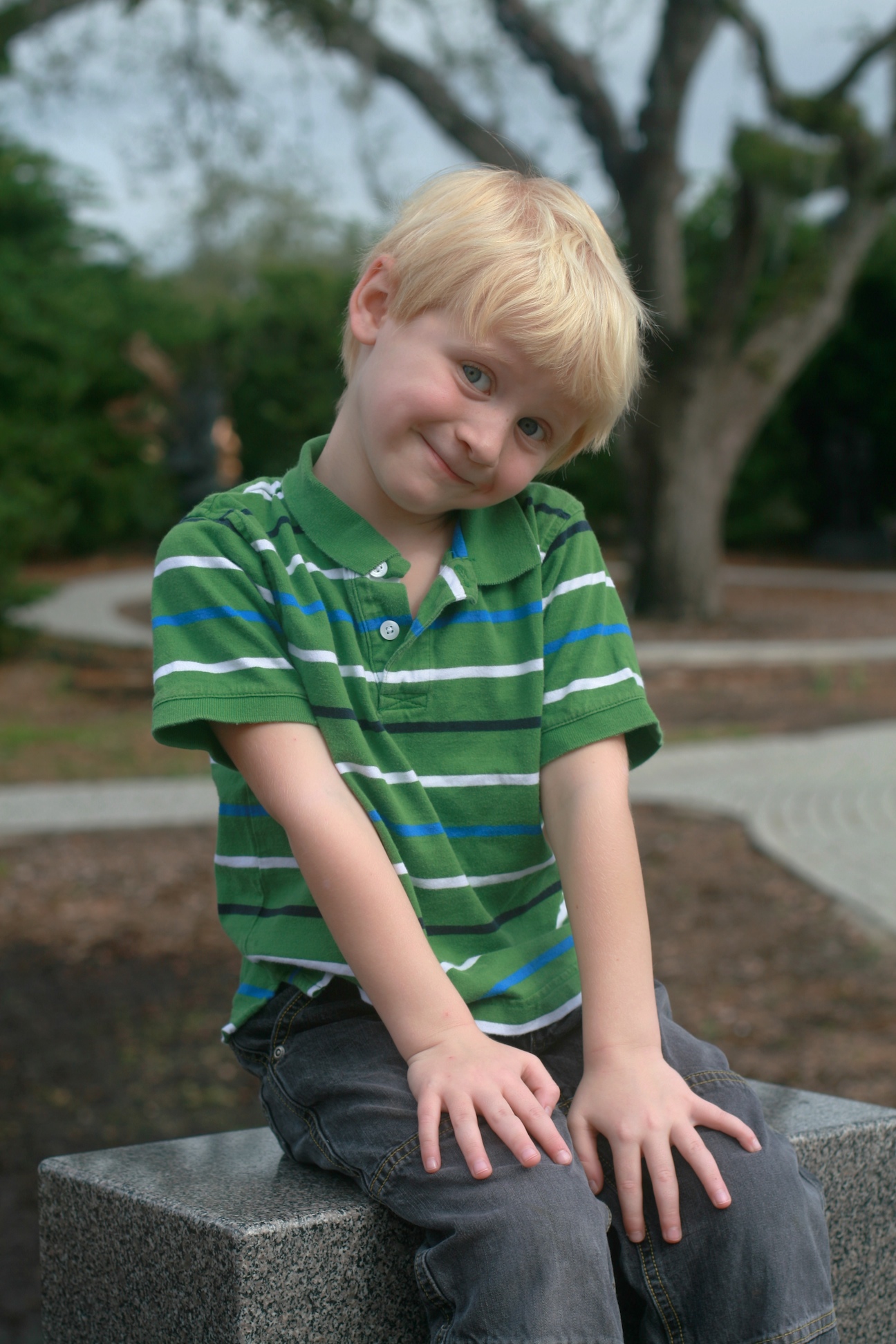
He did, however, not “AWWWW MOMMMMMY!” when I took these, which is a marked improvement over the usual reaction.

He even hammed it up a little.  Boy that kid needs a haircut.  From someone other than me.

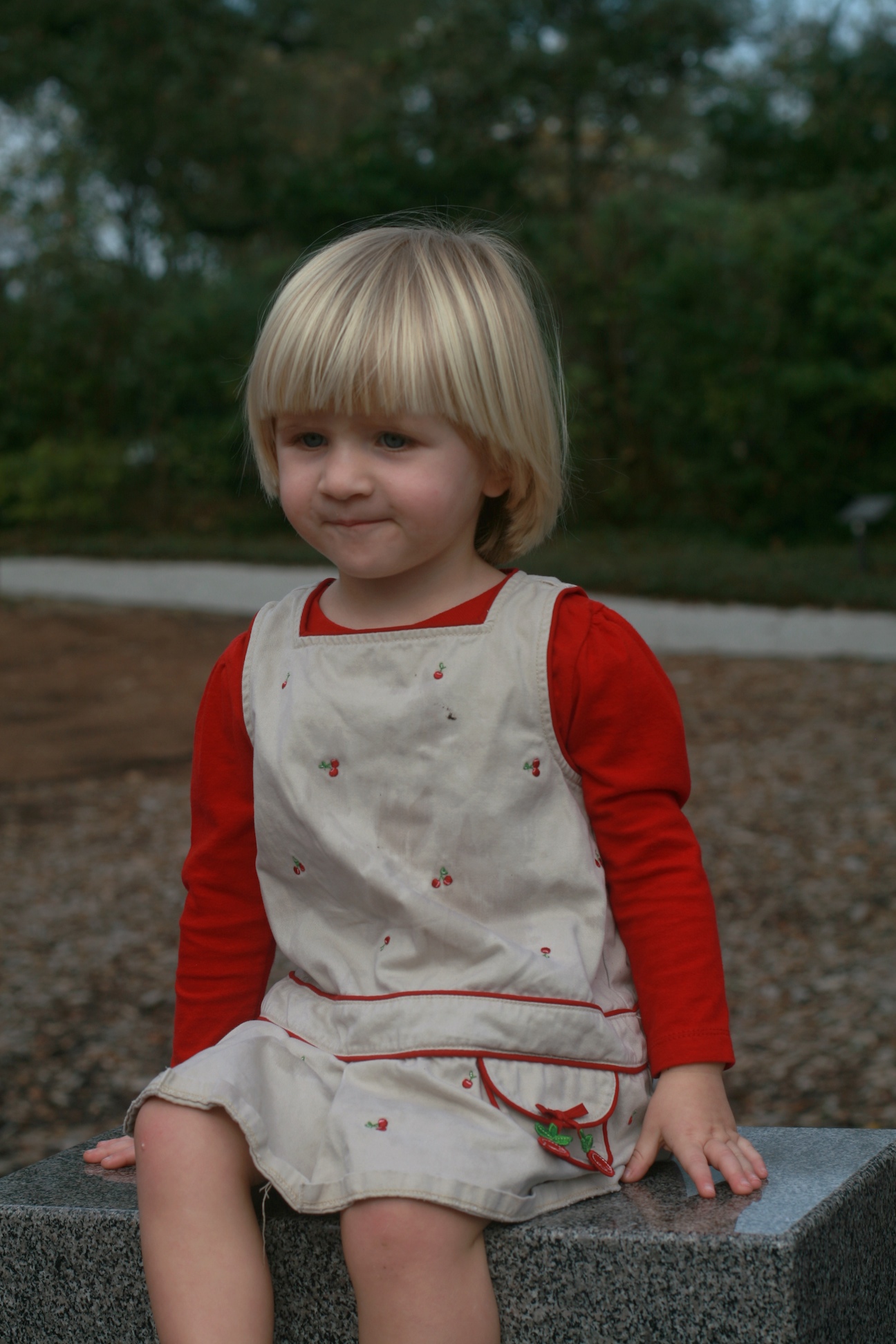
She needs one, too.  No ham here, just cheese.

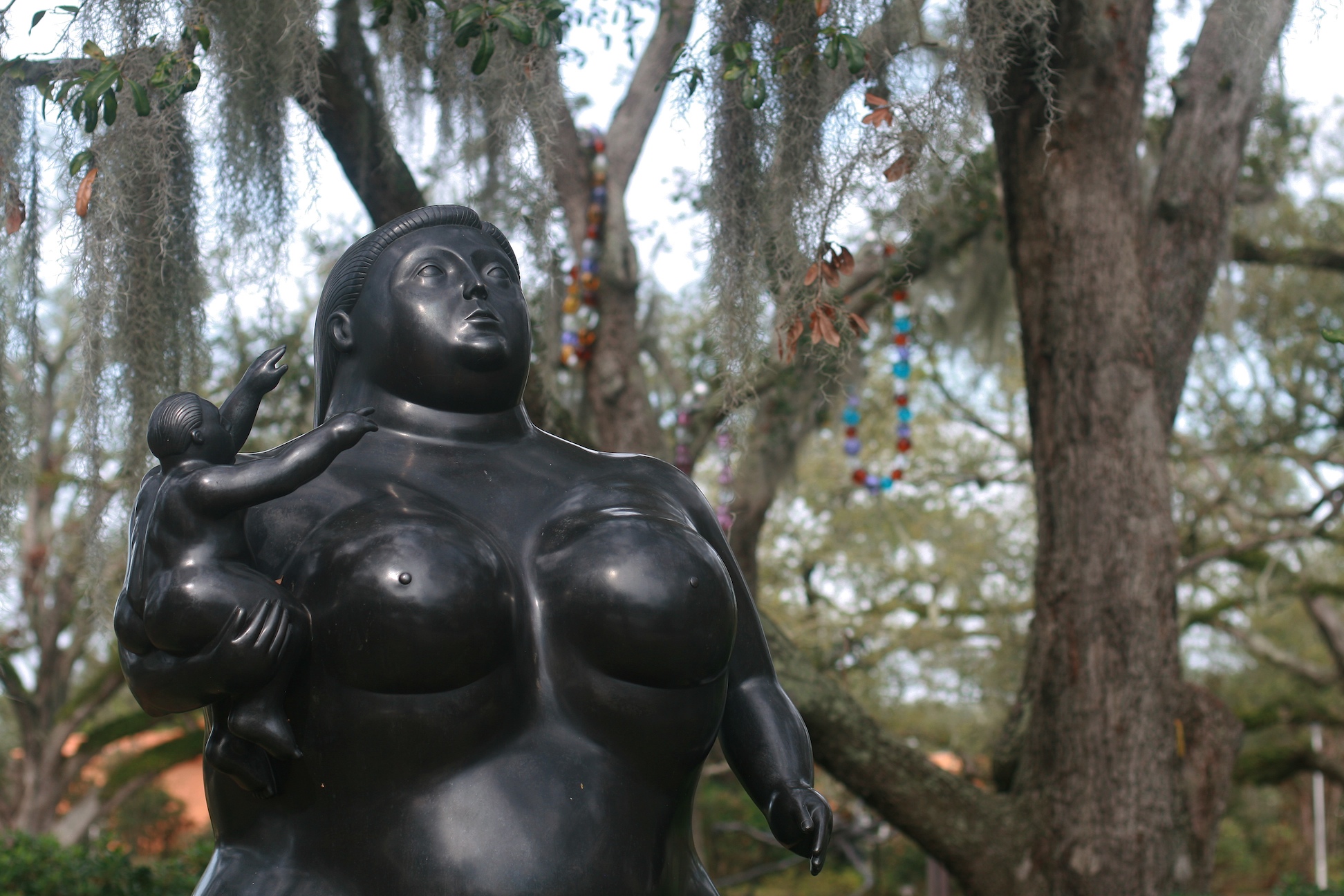
Mother and child piece that the kids freak out over because she’s standing on another smaller figure, which Paul delights in telling the kids “it’s Daddy, Mommies stand on Daddies.”

Art & Photography
Family Life in NOLA
NOLA

Comments (5)

Permalink

So, what is it that you do? Part One.

It’s dense, y’all.  So here’s the first dose.

It’s about race and health in public health research.

The U.S. is a multi-racial, multi-ethnic society, so we use race as a variable in all of our research.  We do this partially because of the fact that racial differences persist in virtually every area of health interest, and partially because of convention – we publish statistics stratified by race, we control for race in research models, and we exclude individuals from analysis on the basis of race.  What we (‘we,’ meaning me and my colleagues of health researchers… if I might take that presumptuous leap of status) don’t do is stop to question whether race is really an appropriate construct – what it means, what it really differentiates, and what it ultimately suggests.

This is really important because the use of race in public health research is very problematic.  The idea is that using race categories controls for some sort of undisclosed differences in population genetics… or in fancier talk, the epidemiologic assumption is that there is a genotypic difference that is being controlled.  But in reality, researchers aren’t in the practice of, say, taking gene frequency measures in their participants.  And more to the point: they aren’t even in the practice of defining the criteria for assigning a person in one racial category to another.

Well, if you’re still with me, you might be asking about the standard.  Because, surely, our medical researchers have come up with some hard and fast rule about the biologic concept of race in medicine.

Nope.

And as much as population geneticists will jump up and down screaming about things like ‘continental racial categories’ and the higher incidence of genetically-related disease in certain groups (say, sickle cell) – the bottom line?  All our genome work has us coming back again and again to say that genetically, we’re all pretty much the same.

Richard Cooper (an MD and Epidemiologist at Loyola Med School in Chicago) is sort of the Master and Commander of this discourse and I’d be remiss to try and restate what he says so darn clearly:

Racial differences reflect different social environments, not different genes, even where two groups live side by side, as do blacks and whites in the United States.  Race does not mark in any important way for genetic traits; rather, it demonstrates beyond question the paramount role of the social causes.  We have much more to learn from that paradigm, rather than the one offered by ethnogenetics.

In short, when we’re studying race, we’re really not studying genotypic differences – we’re studying phenotypic differences.  (e.g.: the differences that result in our environments, not our genetics.)
Okay then, but public health uses race all the time and finds all sorts of interesting results.  What does all that mean??

For one, it means that the results might be screwy.  The majority of public health research occurs statistically: where a model full of complex and overwhelming Greek letters spell out a variety of things (the independent variables) that predict what happens to an outcome (the dependent variable).  Race is most often used as a dummy, or binary, variable – meaning that you are either black or white – so the lack of conceptual clarity about what in the world each of those categories means leaves a great deal of room for error… if you aren’t controlling for something very clearly within your model, it means that your variable is open to error.  It could be measuring the effects of other things in your model, including things in the error term.  This means it could be “endogenous,” which, in public health research, is a Really. Bad. Thing.  Suggesting that using race as a binary variable presents a problem of endogeneity to statistical models is sort of like saying that that ‘vegetarian’ gravy your Mom has been feeding you for all your 20 years of vegetarianism is actually made from 6 different animals.  It ruins everything you’ve ever done with it and colors your ability to use it in the future.  It’s better to just not know.  Or to ignore the reality.  Or!  To reinvent it!

Like, for example, saying that race doesn’t really mean what we think it means.  Let’s get real, you say, we know that race is all messy!  So when we’re talking about race disparities in health, we’re actually measuring other things… you know, like socioeconomic status, discrimination, cultural factors, stuff like this that we know have a racial component.

That’s all fine and good, I answer, but public health models shouldn’t be proxy for anything not clearly defined.  That’s not good science.  It’s more logic to argue that if race is a proxy for other factors, then we need to find better ways of measuring those other factors.  If we’re going to intervene effectively, we need to clearly understand what is going on.

Let me give an example.  Let’s say that you are a health researcher and you’re studying prenatal care utilization.  You’ve got a great regression model controlling for a variety of factors and your results show a statistically significant coefficient for the race binary variable (that the mean number of visits is higher for whites than for blacks, even when you’re controlling for things like income, age, insurance status, etc.)  You might fall into the trap of reporting (as is embarrassingly common in published research) that “race is a significant determinant of prenatal care utilization.”  Think about that for a minute.  The color of one’s skin has nothing to do with how many times someone sees the doctor.  How the world around someone reacts to them due to the color of their skin (or other individual factors) may very well impact how many times they attend a prenatal visit… but that is not what the model is measuring, nor what the data is suggesting!

Further, if you go along that route, you may filter that finding down to medical and public health practice.  It may be unintentional or even unrealized, but your intervention could be focused on race, trying to address whatever it is about being black that means you go to the doctor less.  You may not even think to see what is going on with the doctor, or the clinic, or the system because you’re so focused on intervening in on that race factor… and you’d be missing the point.

Public health science needs better conceptual precision about the measurement of race, period.  At the very least, the lesson here is that we need to be clear on what we’re measuring and how we’re interpreting it.

Issues
Issues
Issues
Issues

Comments (6)

Permalink

The post where Holly says, yes, actually there IS this dissertation thingy…

Possible reader comment:

“Are you really working on a PhD, because honestly, I read your blog and uh… you’re just totally a Mom with a camera and a sometimes nice way of writing.”

No, really, I am working on a PhD.  And while I don’t necessarily feel like I need to say anything to prove that fact, I am starting to turn a corner with my work.  No, no, I’m way too entrenched in academic aloofness to claim some sort of importance in what I find interesting (we get kicked out of the ivory tower club for that kind of uppity behavior) – but I do feel GOOD about it.  In the sense that there could, maybe, be some sort of usefulness in something, somewhere.  Was that stated aloof enough?  Phew.

Unsure of where to start, I’m just going to start at the beginning.  I figure, too, if I can just talk about this in normal language to explain to a regular person, than I do really ‘get’ the big picture here.  So think of this as an exercise.  Oh, and as something that will come in parts… because these blog posts need to be taken in steps before we reach full stride.  I’m telling you: I get winded easily.

So I study health inequalities.  I’m interested in where the best interventions can be made to improve  lives and health statuses.  In particular, I like health research because of how health reflects on social and political histories: there is a story, a reason, why certain people are healthy and others are not.  War, racism, segregation, climate – these all help paint health.  How this happens and how we should work as a nation and as a global community to mitigate those effects are of endless interest to me.

My current research is with Latin American immigrants to the United States.  Because I am working in New Orleans, the majority of these immigrants are Honduran – not Mexican — which is against the norm in many other areas of the United States that can correctly characterize their Latin American immigrant population as largely Mexican.  In short then, what I am studying encompasses both what it means to be an immigrant from Latin America living in the United States and what it means to be a racial minority within the United States.

So the first place to start is with race and health.  Stay tuned.

Issues
Issues
Issues

Comments (1)

Permalink

“Example is not the main thing in influencing others. It is the only thing.” (Albert Schweitzer)

The year I struggled the most was right after college.  I was working for the National Endowment for the Arts in Washington, DC, and had living expenses that were crippling.  One month, desperate for a suit I could wear to some of awards ceremonies I had privy to attend, I purposely used my overdraft protection to write a check that I knew I couldn’t cover on overdraft — knowing that I was to be paid two days later and therefore would not bounce.  That following month, already starting in the hole because of my $50 suit, I gave $10 to a co-worker in the mail room who was collecting money for his daughter’s school.  Initially after I gave it, I regretted it.  It was the same $10 that was suppose to be my lunch money for the next few days.  But ultimately, when I thought about it, giving that money became one of my proudest moments.  I’d be feeling so strapped for months — living paycheck to paycheck — and it made me feel better about my situation and myself to give to others.  Didn’t Anne Frank say that no one ever became poor by giving?

I’ve written before about the importance of spending a little more to lend support to local organizations, local business owners, and local products.  As 2008 drew to a close, I was thinking more and more about the things I’m most proud of this year and wanting to talk about giving… but I felt like it would come across as showy or superior, which is not how I feel about it nor how I want to come across.  So I stayed quiet about things like money and giving.  Then Jen and Mad posted about giving and encouraged it from others.  So here I go.

I’m proud at how we give.  And each year, we strive to give more.  I’ve read a lot about folks trying to get back to basics, reusing and recycling, all that jargon that is so popular these days.  But what about giving your time and money?  That, in my opinion, is the giving that matters.  If you’re just giving away stuff from your attic or closet or basement that you don’t use anyway, is it really an effort to be a better person and community member, or just to improve your own life?  And while that’s good in it’s own place, what about setting examples for our children on giving more than our old things: our time, our attention, our energy, our talents, our hard-earned money… to help others?  Isn’t teaching compassion and empathy the whole point of living simply — and if it isn’t, well, then shouldn’t it be?

This year, we gave more than 5% of our total income in cash donations, donated our services to local fundraisers, served on nonprofit boards, sponsored local events, volunteered on committees, showed up for work days, assisted with computer help to organizations and individuals, wrote grants, taught English, and offered translation.  All of these called for our time and took us away from paying work.  We don’t have money to burn or family inheritance safe guards.  If we just had made our donations in-kind and saved the cash, we could have done all sorts of things we’d have loved to do: spent more time at the beach, gone to Disney World, finally replaced that 12 year old mattress with a king-sized set, upgraded my 6 year old camera, or hired help to finish some of the many renovations we’ve been working on for years.  But we believe that the only way to give is to plan for it every month as a necessity.  There is never enough for anyone to feel secure, it’s always that way.  So giving has to be a priority.

No one has ever become poor through giving.

And really, what will happen if you gave an extra $20 or $50 or $100 a month?  Would you starve?  Would you lose your home?  Because within that month, there are many many many many many in our world who will.  What will you have lost?  I’m not trying to be preachy… this is what I feel, what I say to myself when I feel frustrated or stretched thin or like I’m denying myself or my family things that could make our lives easier or brighter.  Because in the end, we are better than great.

And ultimately, when we came to the end of the year, I didn’t regret the things I hadn’t bought or done.  (Even if I still wish we had that big bed and am bummed that we are stepping over construction debris each day.)  All that really doesn’t matter.  Instead, I wished I would have given more during the year and encouraged others to do the same.

When you come right down to it, we live extravagantly compared to most of the world.  So we should do more.  There is so much more to do.

In the first few months of this year, we are giving monthly donations to Abeona House, the preschool we helped start after Katrina.  While Abeona House is just one of the organizations we give to, it’s one of the ones closest to our hearts and the one we pledged to give the most to.  Having helped start the organization, we know how it works, where the money goes, and how it is managed.  We know that the people employed are being paid a good wage (although childcare professionals are paid a pathetically low salary across the board everywhere) and full-time employees receive benefits, which is rare in this field in our city.  There are Abeona employees who lost homes in Katrina; one is still living in a FEMA trailer.  Abeona is one of the only preschools in the city to offer a sliding scale tuition.  Donations to the school help it offer placement to more lower-to-middle income families (teachers, social workers, nonprofit organization workers, artists) who would otherwise not qualify for State-based assistance programs.  If you are looking for a 501c3 organization that will use your donation in the service of children’s programming and family support: this is one that applies.

Other organizations we feel similar about and give to are Ecole Bilingue (where our kids currently attend school) and Planting Magic Beans (founded and run by good friends of ours in Peru).

No matter what happens, I know that we will be okay in the ways that matter.  And ultimately… No le hará rico; no me hará pobre.

Issues
Issues
Mi Familia
News

Comments (7)

Permalink

Photohunt: Hope

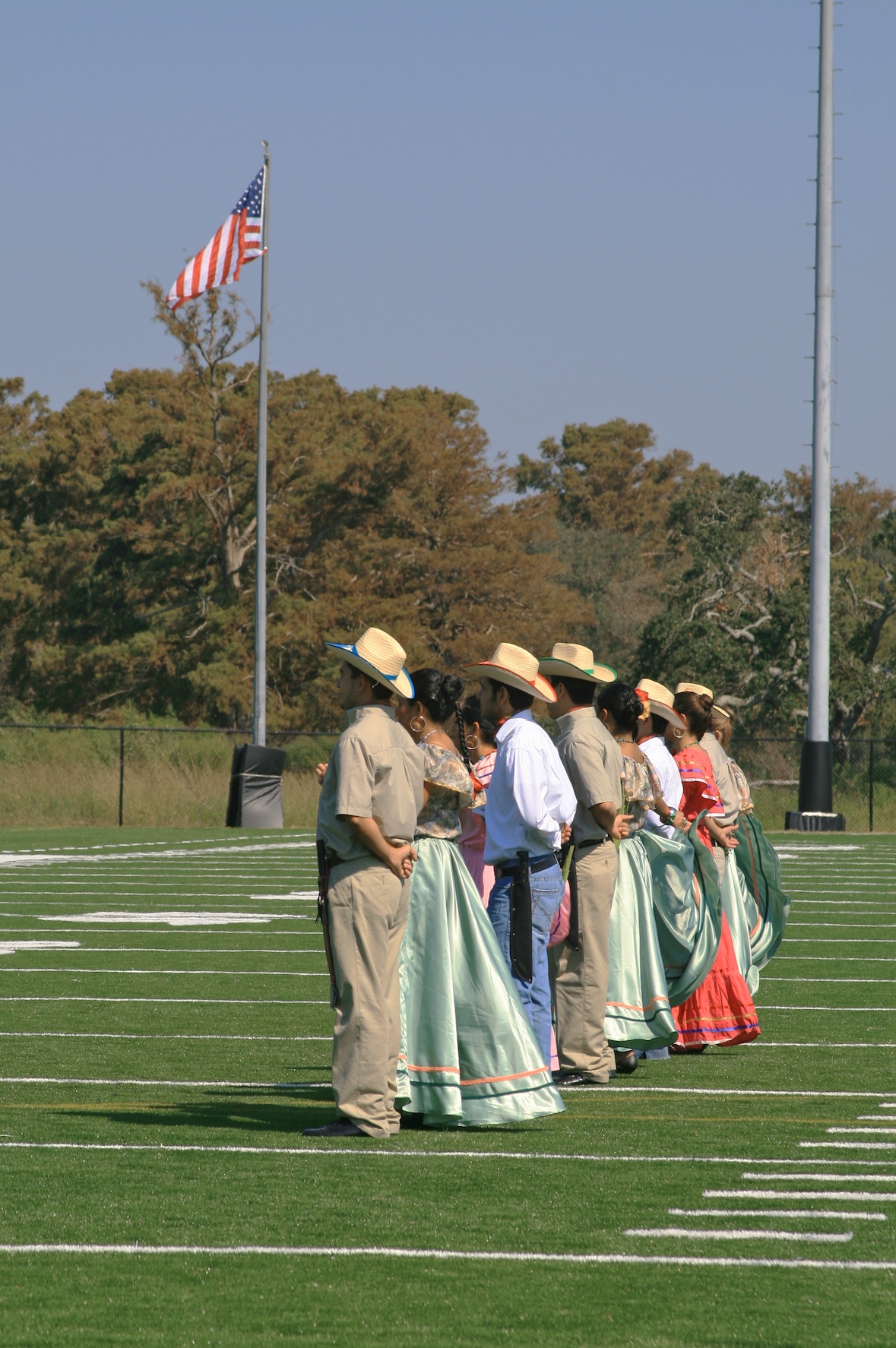
Immigrants from Mexico participate in a cultural program showcasing traditional Mexican dance and dress at half-time during a Pan-American soccer game held in New Orleans, LA.

Creo que el futuro de los Estados Unidos está escrito en más que una lengua.

I believe that the future of the United States is written in more than one language.

Hispanics are the largest ethnic minority in the United States.  Within my children’s lifetimes, this group is predicted to become the largest ethnic group in the United States.  I believe that embracing our Nation’s future as part of the Americas, and seeing ourselves as a multi-ethnic, multi-lingual, multi-cultural society is what will bring us hope for the future.

Art & Photography

Comments (7)

Permalink