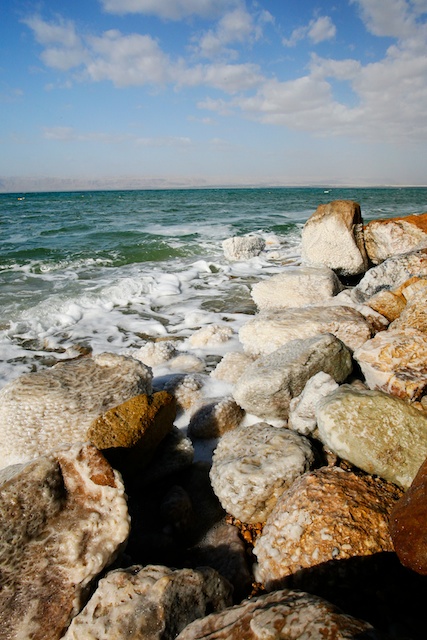
Mount Nebo
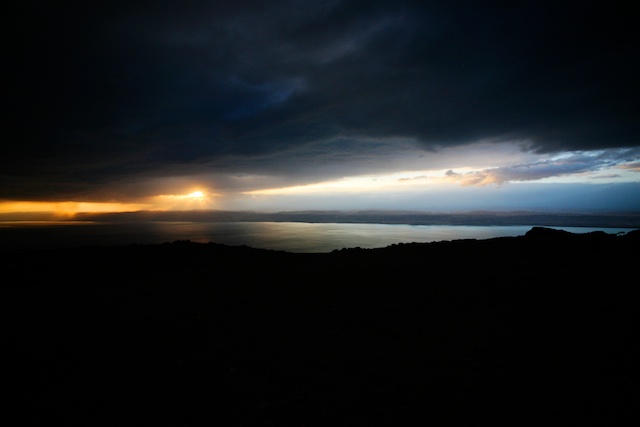
A few kilometers outside of Madaba is Mount Nebo, the last height in the mountains before descending deep into the Moab Valley, toward the Jordan River and the Dead Sea.
Mount Nebo is where Moses goes to look over the Holy Land. Â It is also where Moses is said to have been buried. Â It’s all relative — figuring out what is or isn’t the location of something roughly described in a passage of scripture is a mess of archeology, history, tradition, politics, and religious intent — but folks are confident that if Moses looked over the Holy Land, this is where he did it. Â (To read the Deuteronomy passages that refer to Mount Nebo, see this and this… I couldn’t decide on a translation to post to reference the importance of the mountain!)
During the visit, I learned that one Prophet hid the Arc of the Convent here at some point, in a cave on the mountain. Â (In my view, the storage facility at the National Archives probably remains the better hiding spot.)
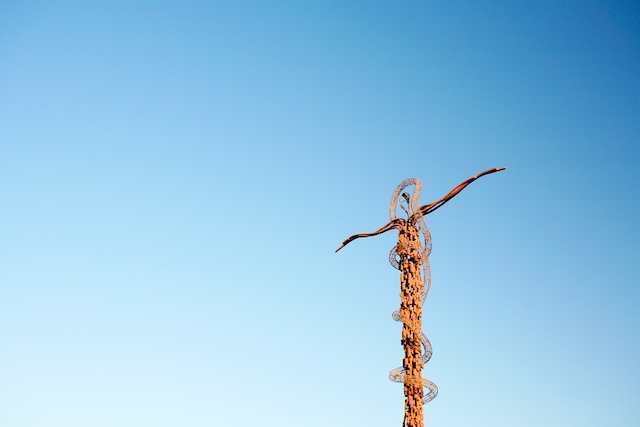
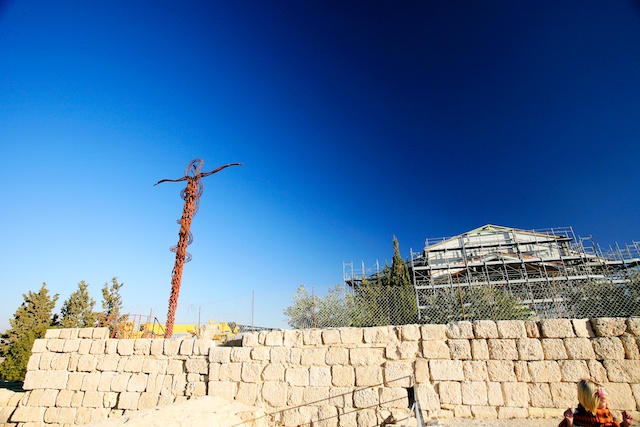
Construction and restoration to the site, to include a fantastic church and museum, is ongoing — with support from the Italian government (signs posted in English, Arabic, and Italian!) Â The construction currently blocks access to points of the Mount, including limiting how close you can get to the Serpentine Cross (Brazen Serpent Monument) which is beautiful and striking. Â (I had hoped for some photography right up and under the monument, but had to be content with photos from afar instead.)
Here are some photos of the site.
Monument at the entry:
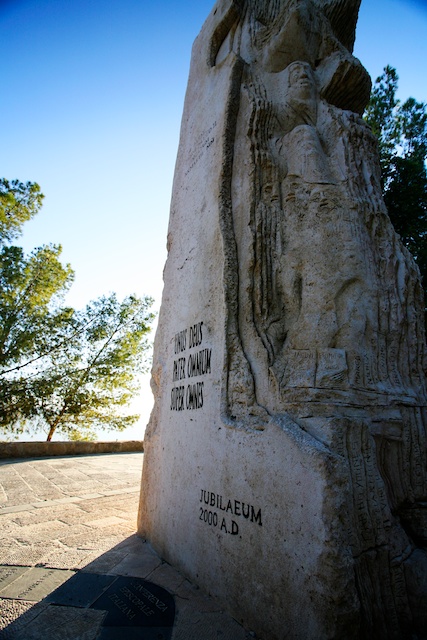
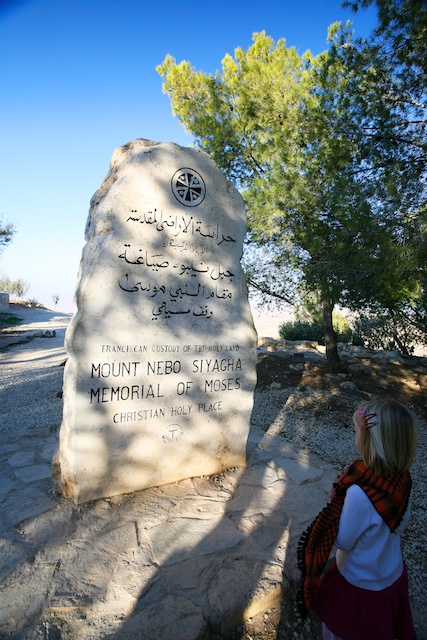
Memorial to Moses, who is claimed to have been buried here by God (location unknown):
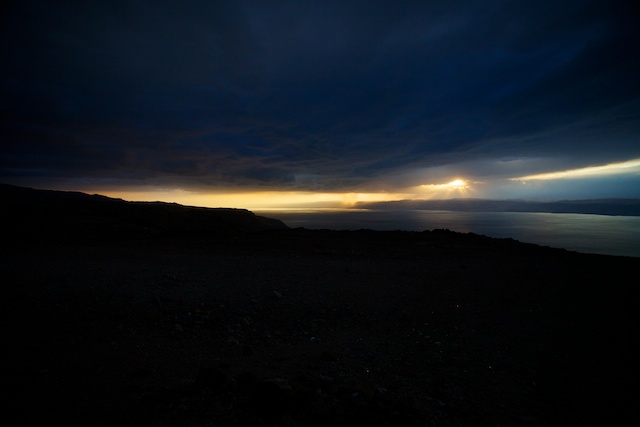
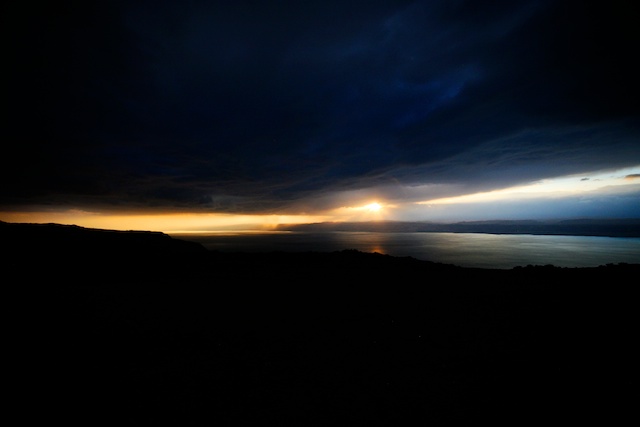
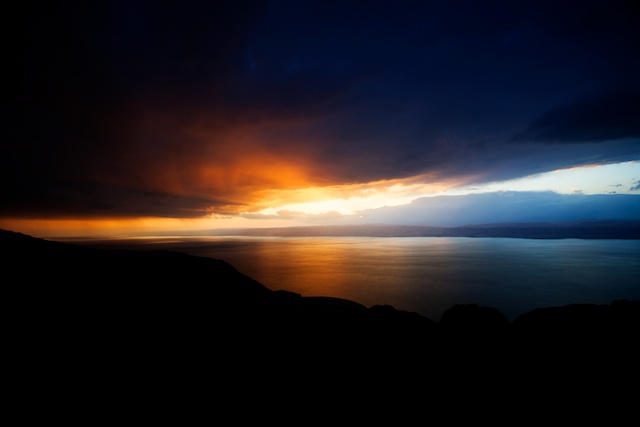
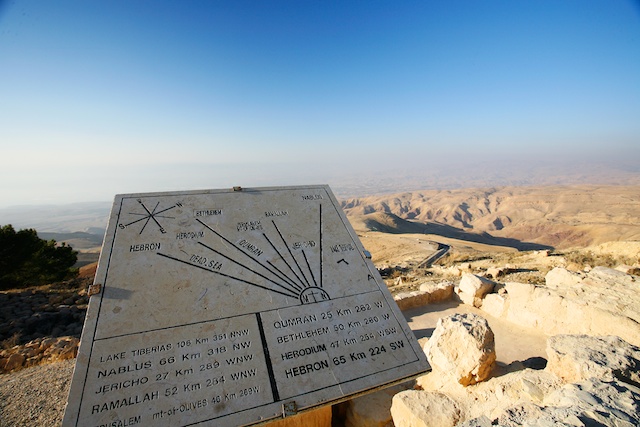
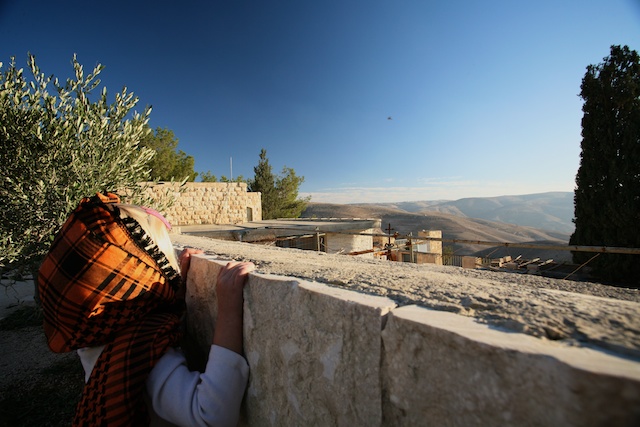
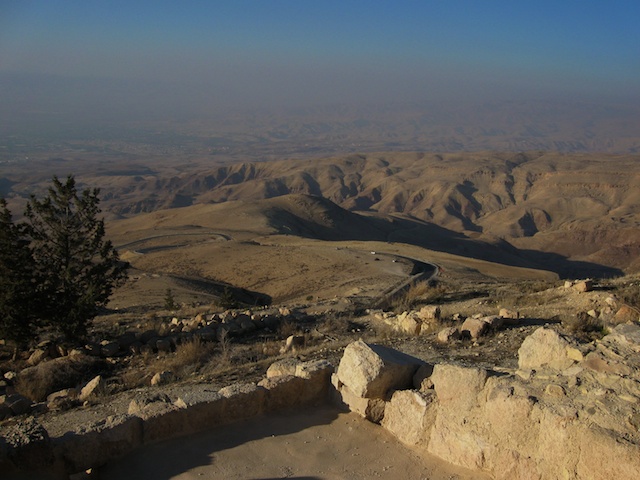
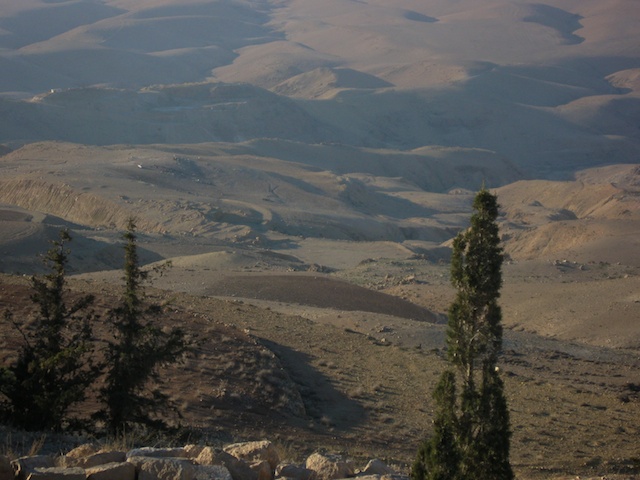
View of the Holy Land. Â You can easily see Jericho (in Israel, just past the Jordan River) and on a clear day, can see the cities of Jerusalem and Bethlehem.
Serpentine Cross:
Cross with construction site:
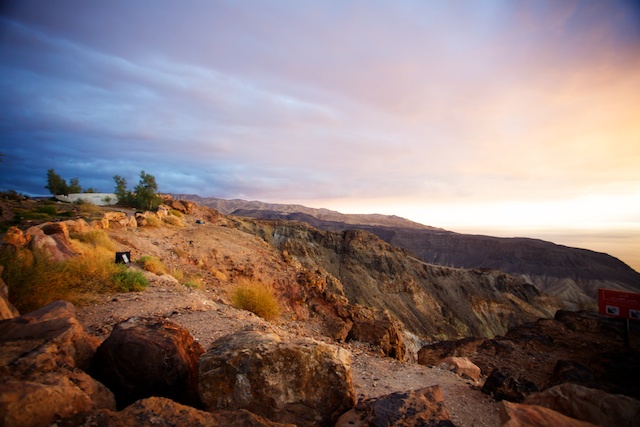
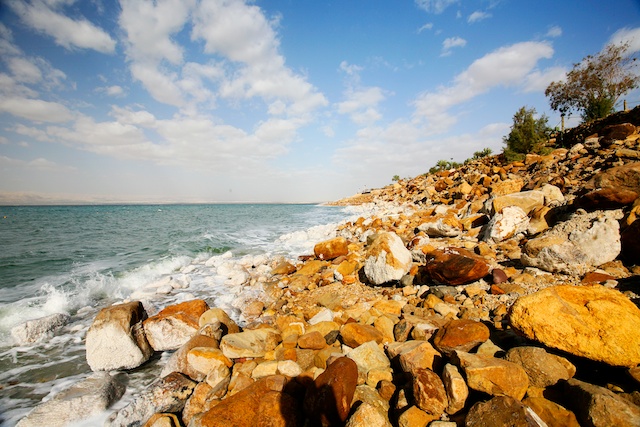
More of the view. Â You can see the road leading down from Mount Nebo — it is a spectacular drive into the plains of Moab, past Bedouin tents with livestock on the hillsides, and impressive rock throwing golds, reds, and yellows back at the sunlight.
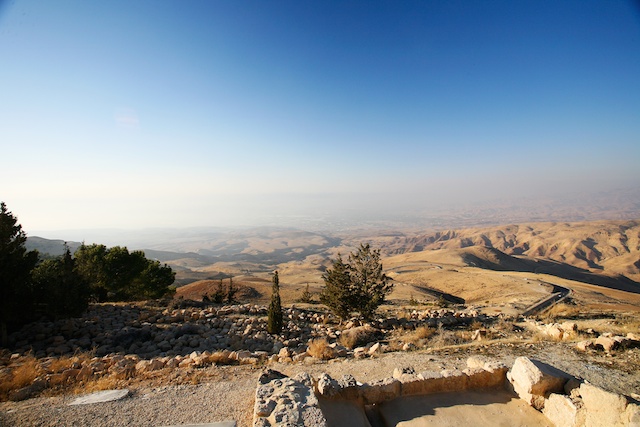
If you look very carefully, you can make out the northern edge of the Dead Sea.
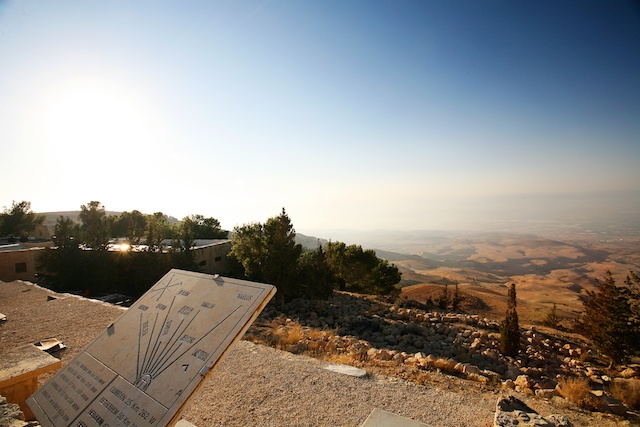
Looking south…
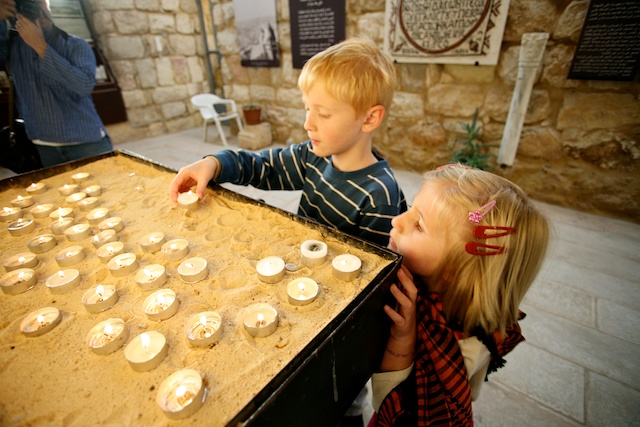
Lighting candles in the museum:
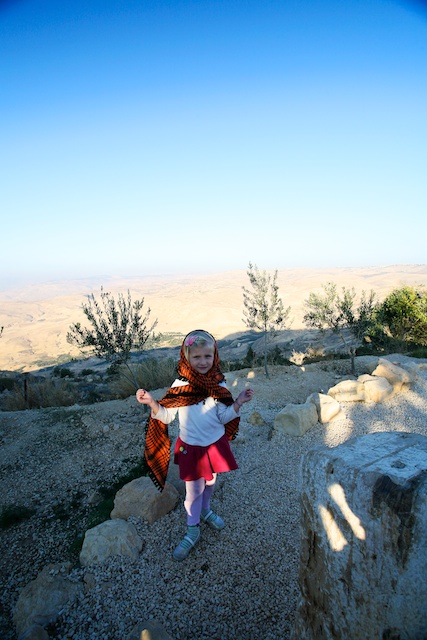
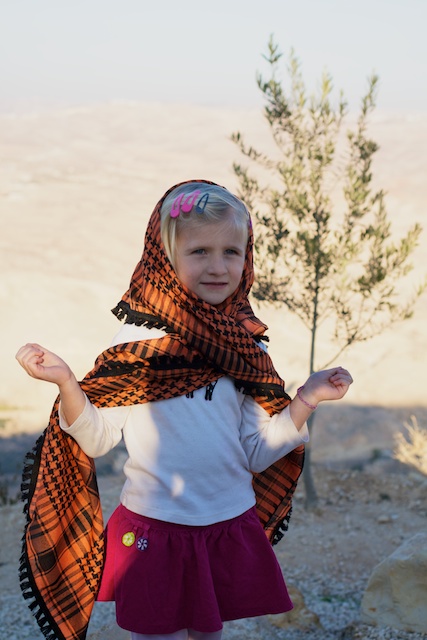
Kate, dancing. Â She claimed that “ladies like her walk like this…” Â She also claimed that ladies like her don’t walk on stones, and that she had to be carried. Â We had to stop right there on Mount Nebo and have a talk about what ladies do and don’t do. Â She decided to stick with the dancing and posing.
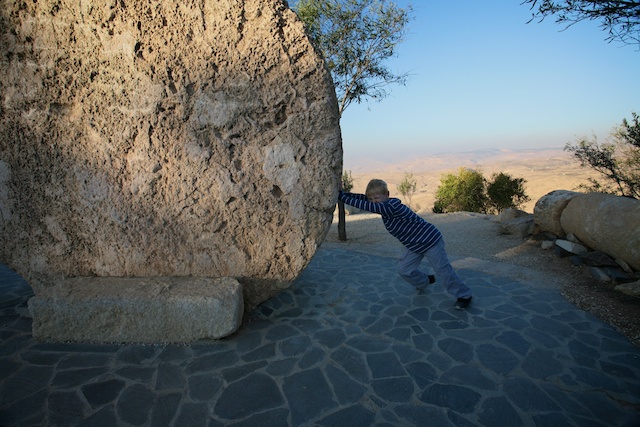
Giant stone used to protect the structures on the Mountain from invaders. Â The stone would be rolled in front of the open door way in the event of unwanted visitors approaching. Â Will did his best to move it…
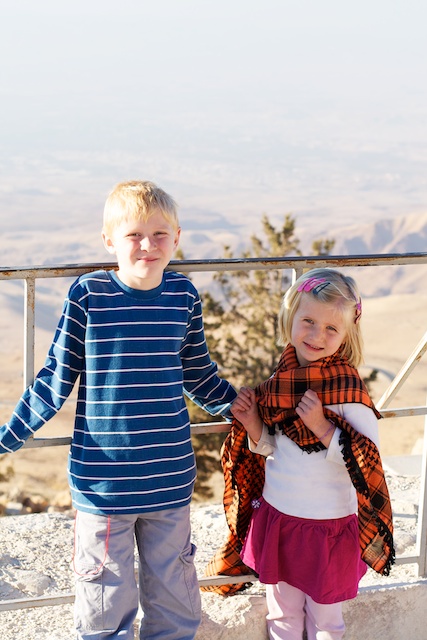
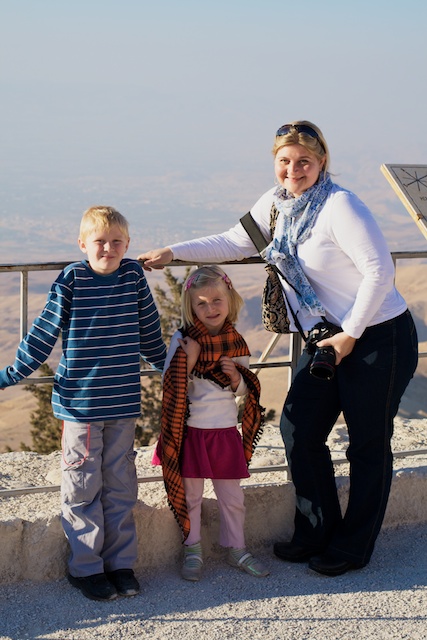
The kids at the overlook:
Kate. Â Being Kate.
Another view…
Still another view…
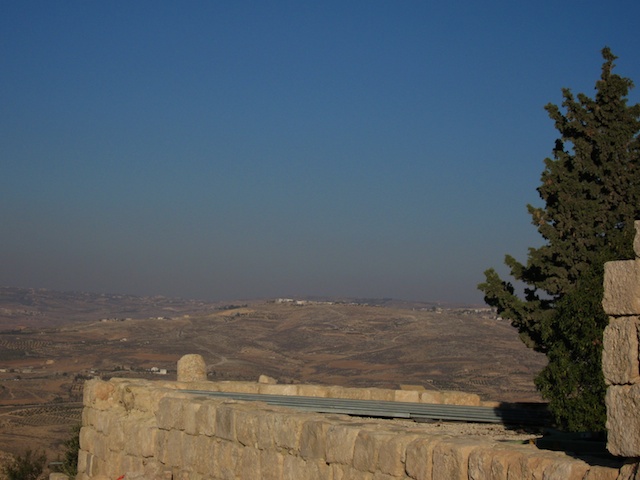
I feel like this helps give a sense of the colors, textures, and layers in the land…
Kids and I at the overlook…
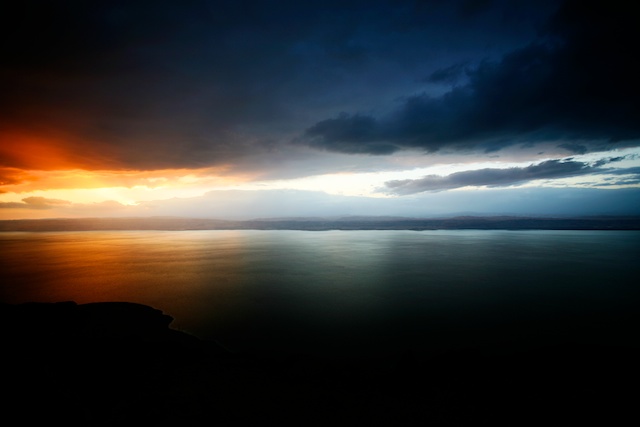
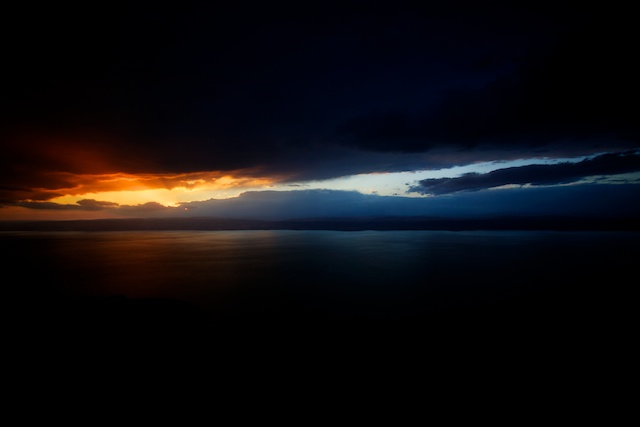
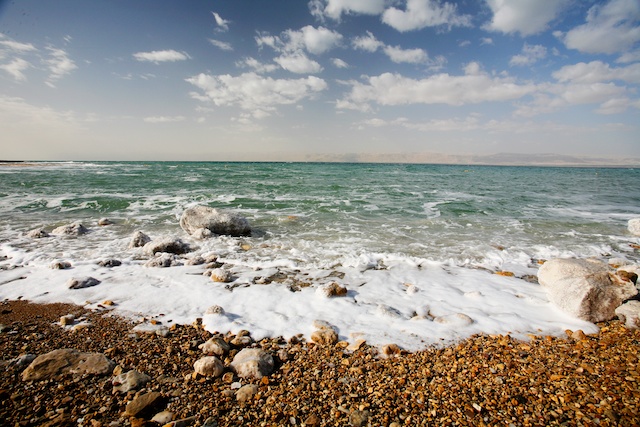
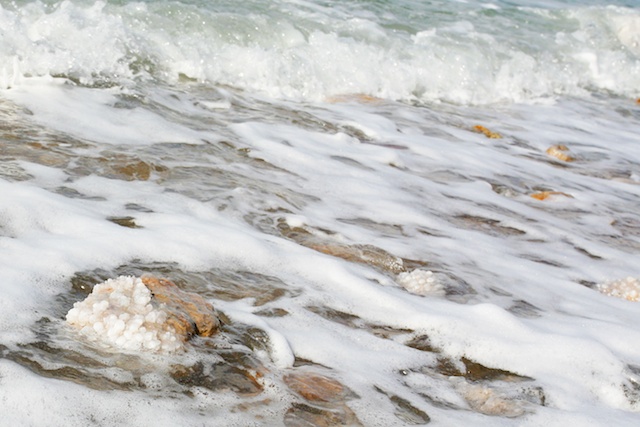
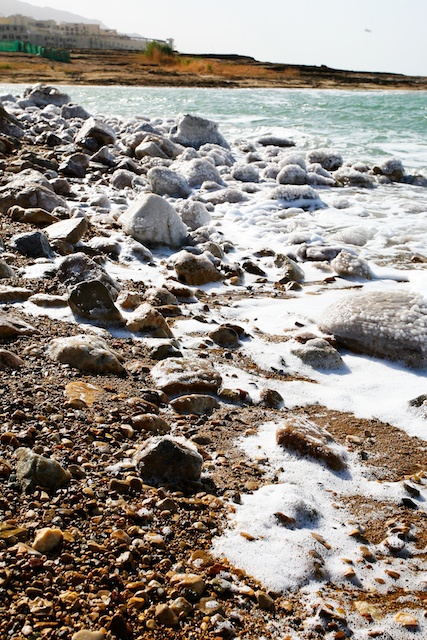
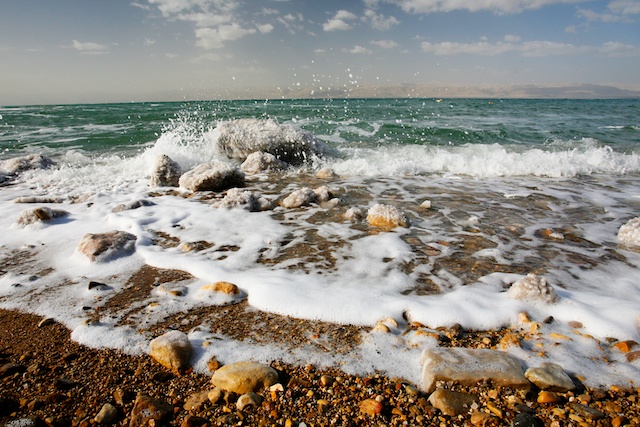
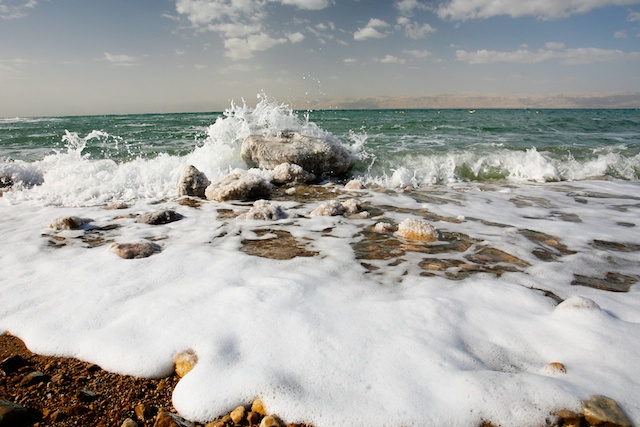
From Mount Nebo, we descended into the plain and into the lowest area of the earth… ending at the Dead Sea!
Madaba, continued… LUNCH.
En route to St. George’s, we tried to see another Archeologic Museum site.  Poking around trying to find it, we passed a few tourist shops.  One of the men on the street in front of the shops explained that the area was closed (it was Friday and the door guard was off at the mosque), but if were walked along a back road we could see everything inside.  It was a good tip and he was friendly enough, so we launched into very basic conversation.  Or, rather, he engaged the kids — at the moment, Will and Kate are actually the most popular tourist sites in Jordan — and we participated in very basic pleasantries common in Jordan (where are you from, what is your name, hello, how are you).  He ended up giving the kids stuffed camels, wanting or indicating nothing in return, simply because he wanted to give them a gift.
So, after we left the church and saw what we wanted to see, we decided to go back and find his shop and purchase something from him.  He GAVE our kids toys, after all.  Ploy to get us in the store?  Maybe, but Jordan isn’t really like that, and even so, he gave them willingly and never asked for anything in return.  We wanted to give back to his generosity as it seemed like the right thing to do.
It didn’t take long to find him.  Within 2 minutes of seeing him, we learned his name (Malek) and he’d given Kate another gift (a doll).  He had a artist making a mosaic table top for a customer who came to check in on it — which gave us an opportunity to learn about the different techniques and styles.  We ended up choosing a mosaic made in-house with Jordanian symbolic significance and he offered to have the wood frame buffed up nicely.  While this happened, we asked if he could recommend a good place for lunch.
“Tourist food?”
NO. Â Local food. Â Jordanian lunch.
“You okay with sitting on the floor?”
Absolutely we were!
“Local food, I order for you? You like meat, rice, youghurt?”
Bring it!
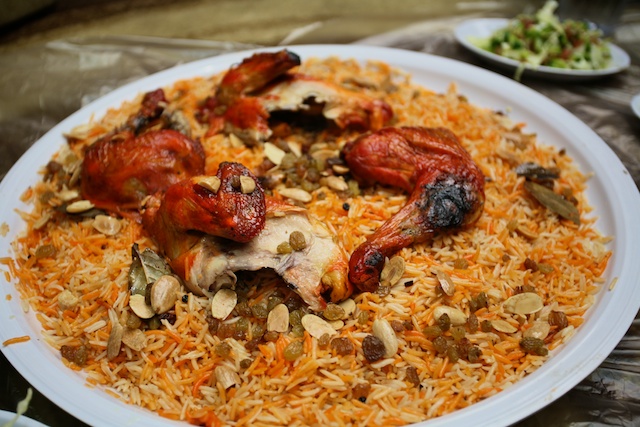
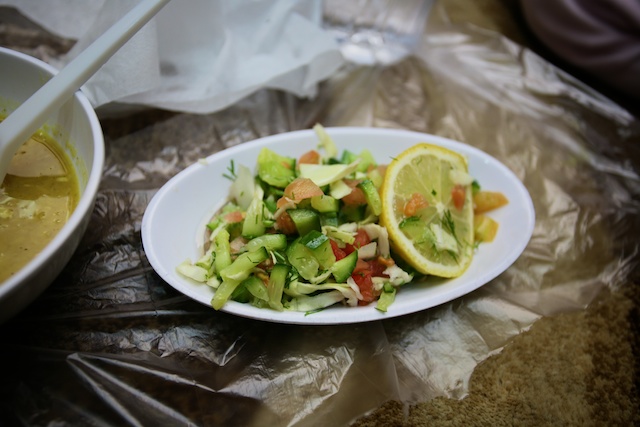
Malek insisted on driving us over. Â True to his word, he greeted the owner with us and explained all that they needed to do. Â We took off our shoes and entered a small cube with cushions lining the walls. Â They laid down a plastic sheet and we sat around it, ready. Â Traditional lunch, the place’s “best dish” (according to Malek): first lentil soup, salad, tomato salad, youghurt, and then main dish with grilled chicken on rice with dates, raisins, and almonds. Â Then tea.
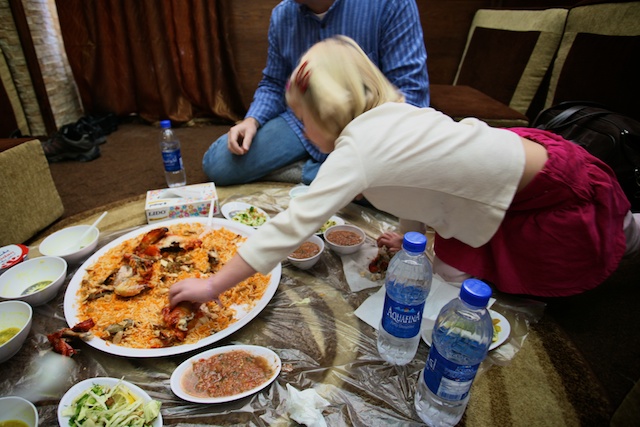
Just as if we were in a Jordanian home, we sat around the plastic cover on the rug and ate with our hands. Â Kate, who has never completed a meal without using her utensil-hating digits, was in HEAVEN.
Here’s what it all looked like…
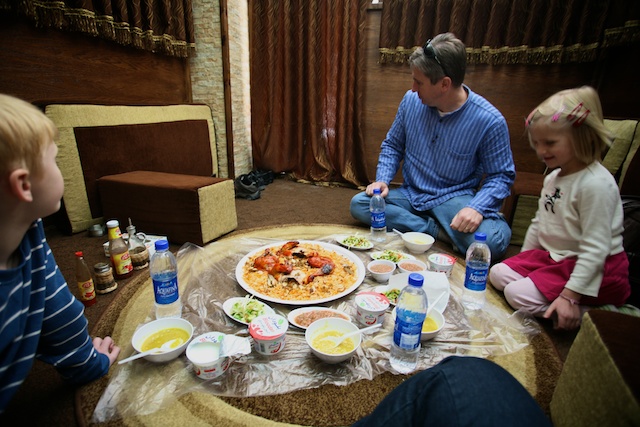
Dig in!
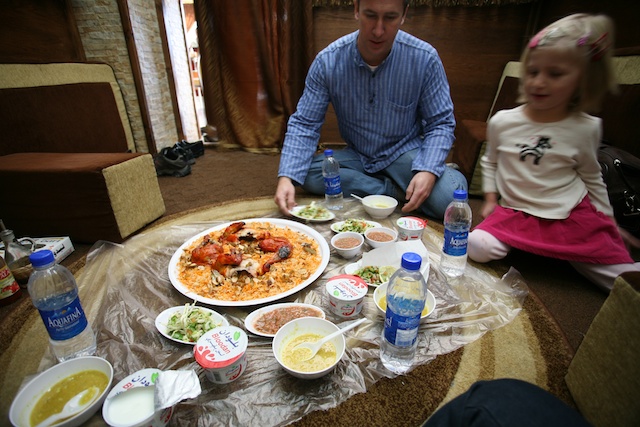
Seriously good stuff. Â And the almonds? Â WOW. Â So good it makes you wonder whether you’ve actually ever had an almond before.
Little salad. Â Will, for whatever reason, LOVED this salad. Â Please don’t tell him that it is cabbage.
Kate wanted to live in Jordan, FOREVER(!), after realizing that eating with hands is okay here.
As Will has never actually sat completely with both butt checks in a single chair at the same time, he was most happy with sitting in the floor.
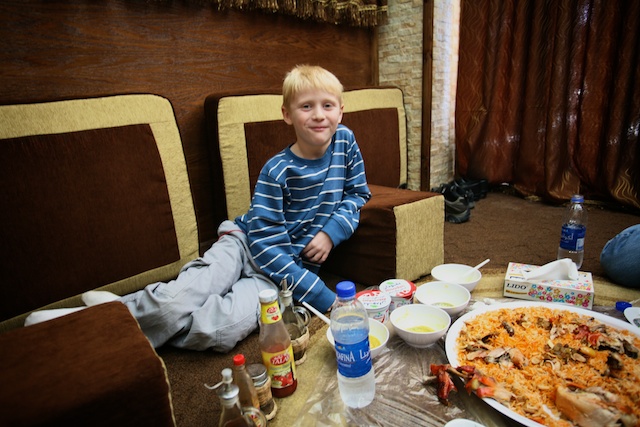
The happy face of a child with sticky hands.
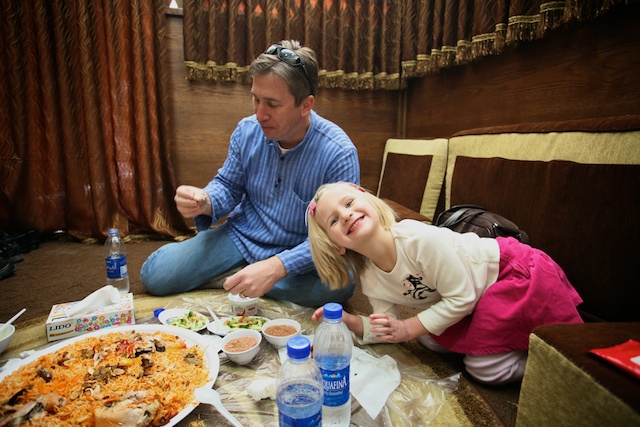
Like everything, tea comes on a tray. Â You don’t take the tray from anyone either (especially if you’re female and the server is a male) — you let them put it down in front of you. Â Even if there is a sea of debris at your feet. Â They’ll work it out.
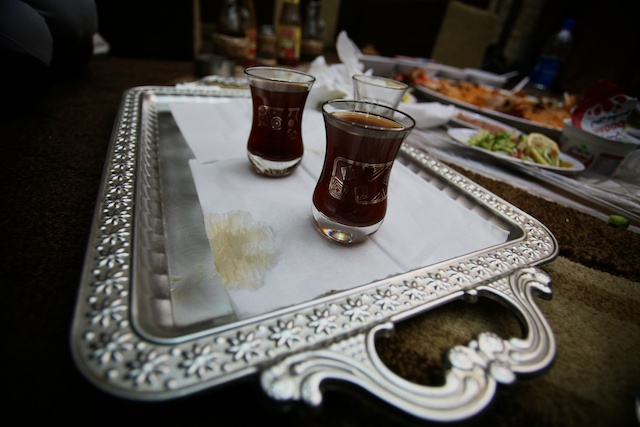
The tea was spiced with herbs to help with digestion. Â I’m still amazed that Will drank his up — with great concentration in doing so, too!
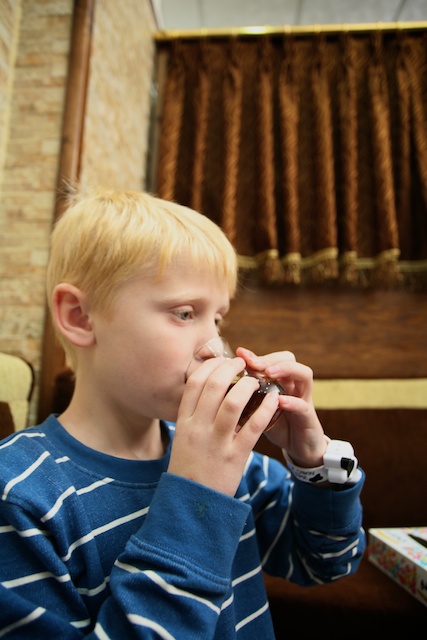
Even Paul drank it down!
The entire meal — including the unnecessary tip we added — was 11 JD. Â (About $15.) Â Cheaper than the cost of 1 of the four of us eating anywhere a tourist might go.
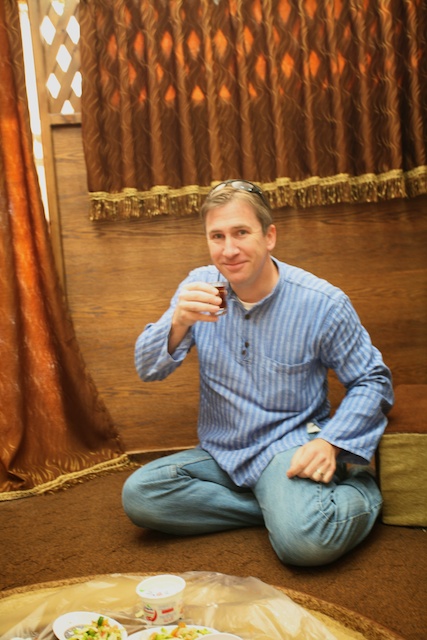
Malek picked us up when we were done and brought us back to the shop. Â He made Bedoin headscarves for the kids before agreeing to a picture.
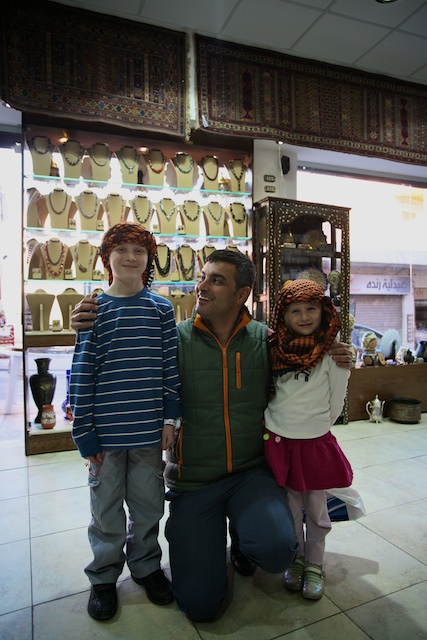
If you’re in Madaba, we highly recommend stopping at PEACE, the main store owned by Malek Abu Al-Ganam. Â You can also reach him by Telephone (00962 77 7872563) or email (peacs_2010@hotmail.com).
Madaba
There wasn’t much time for planning. Â We made the reservations less than 48 hours out, with the basic plan that we would use the Dead Sea as a home base for the holiday weekend, making day trips from there to see the area. Â There was little planning on how to get there, if there were landmarks to see on the way there, and even how to leave the city by car.
Also, the car that Paul rented was on empty. Â This is how they do it in Jordan: you get an empty tank. Â But they were so nice… giving us the car the night before we needed it at no charge, and dropping it off to our home… who could complain? Â Finding a petrol station in a city of drivers can’t be too hard, right? Â Right…???
A tip: if driving in Jordan and you wish to have a road map, these are ONLY available at LIBRARIES. Â Not at petrol pumps, grocery stores, mega-box stores, or anywhere else. Â Libraries. Â And, in case you go looking for libraries, they will not be open during any moment outside of the workday, so forget trying to find one on your way home one afternoon. Not that you’ll actually be able to locate the building in a timely fashion. Â Another tip: if the whole library-map thing gets you down and you consider the rental of a GPS, take into account that the GPS you rent may not have been updated in this century. Â This means that all streets you are actually driving upon were not in existence when said GPS memorized the local roads. Â This will make the GPS highly problematic and worse, incredibly annoying. Â Finally, a last tip: simply go with the wife’s ‘we’ll-figure it out’ mentality and stop and ask lots of people for direction, or get very lost. Â Both add up to adventure, and that’s the point, right?
RIGHT.
So, we decide that Madaba is south and we are headed south (google had told us there was petrol south) and after thorough confusion about what, exactly indicates a “big bridge” — (the guy at the baked goods store at the side of the road said we should turn on a “big bridge” — note: “big bridge” may be a two-lane overpass) — we were committed: Madaba!
Madaba is a great choice for a traveler stop. Â For starters, there is a LOVELY visitors center. Â It is especially lovely because it avoids the word “tourist” in its description, and therefore, right off the bat is a hundred times more welcoming to me, the snobby traveler.
So without any horrid tourist labels, we arrived in the relative calm between tourist groups. Â Travelers at the Visitors Center in lovely Madaba. Â (Kudos to Paul in his driving in the narrow city streets, navigating children, livestock, round-a-bouts, and stores with wares spilling over the narrow sidewalks!)
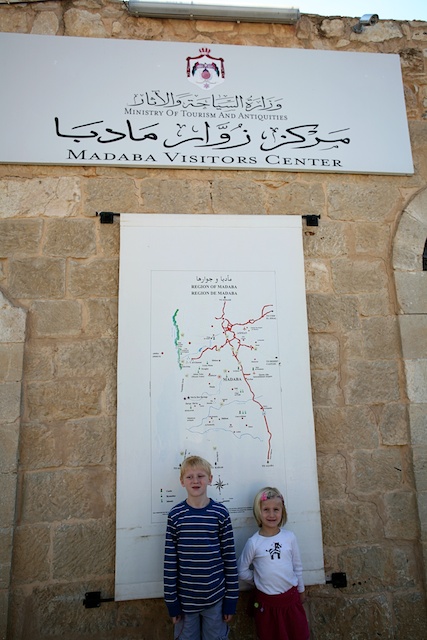
Every field works hard to improve, and indeed, our international aid efforts are no different.  There is a lot of criticism of international aid, and while some of it shows there is room for improvement, I think it’s important to remember that that aid has done a great deal of good in the world.  Including protecting some of the most important archaeologic and historic sites in Jordan.  The sites in Madaba are evidence of that investment and when I saw this sign, I was really proud of that contribution from my country!
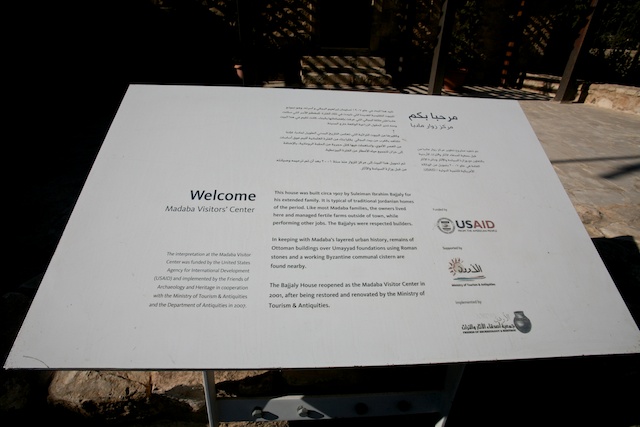
Visitor’s Center information in hand, we set off along the worn path of travelers to see Madaba’s sites.  The first was the Archaeologic Center.
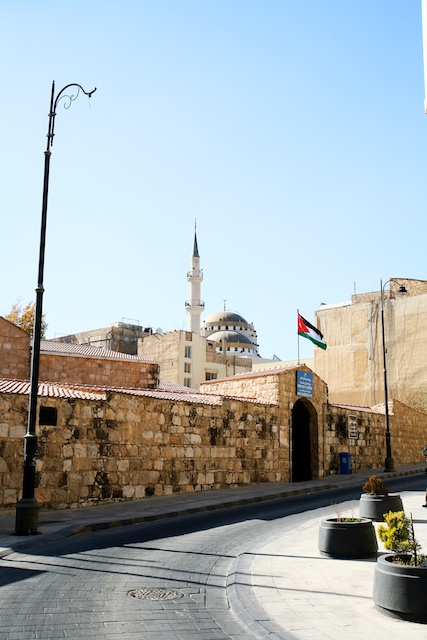
(Is this the museum? Â Or a park? Â Or an announcement for the collection of tourists for gladiator battles? Â Arabic is tough stuff for us talentless Yanks, I-kind-you-what. One must be prepared to be okay with being a clueless moron in just about every situation!)
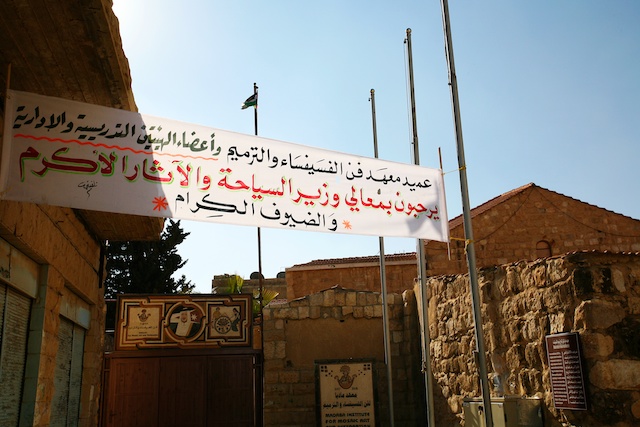
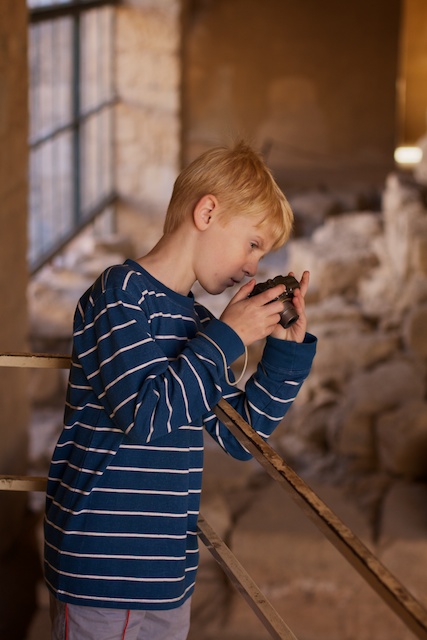
But we FOUND the site!  And happily went along in, reading the bilingual guides.  The kids are thrilled by any artifact they can photograph, so as long as we give them a camera to use, they are eager learners of late Roman and Byzantine history.
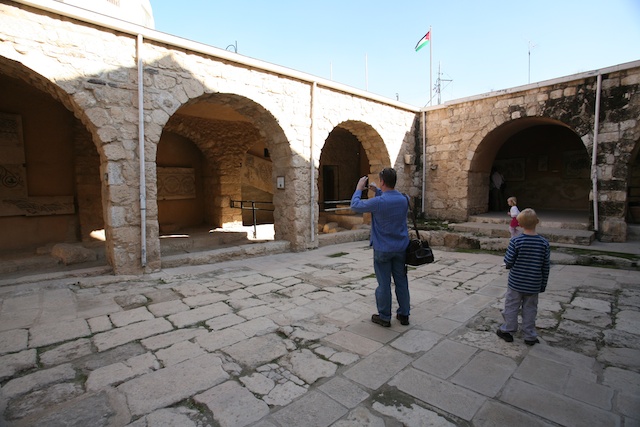
These are mosaics preserved from 6th century buildings in Madaba. Â This particular site had included a Roman road from the 2nd century, a sprawling estate, and then a church.
Having seen many Green and Roman mosaics, everywhere from museums in the US, UK, Italy, and Greece to those still on the walls in Roman and Greek buildings dating back hundreds of years… in my experience, these are some of the most impressive mosaics I’ve ever seen.
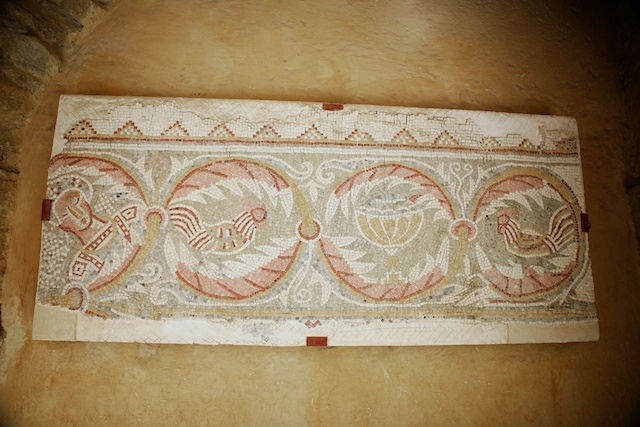
The clarity, the brightness and quality of the color, the SIZE — all very notable. In addition, the close proximity of the visitor to the pieces is unique.  Although a wonderful opportunity, perhaps this is not for the best.  One would hope that no douchebag violates that by defacing a priceless piece of history and artistry, but these people are unfortunately among us.
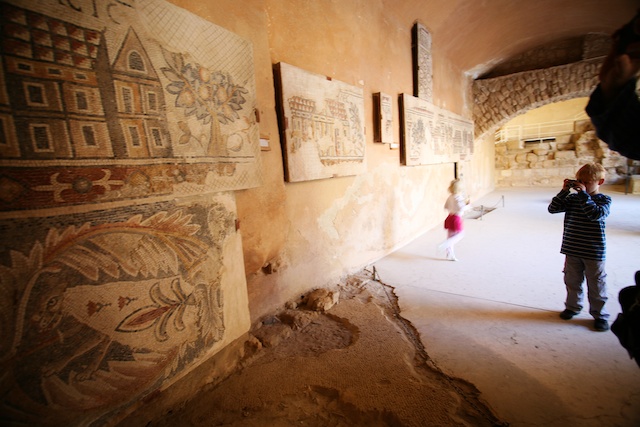
Like I said, you can really get close to admire the work. Â This piece is over 1500 years old.
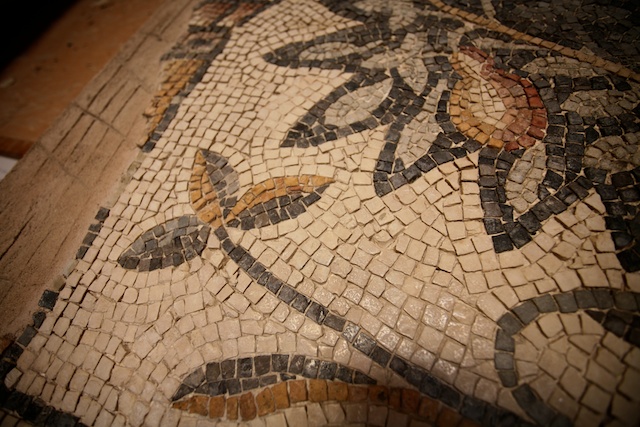
The other pieces are around the main designs to show how the edging would have looked.
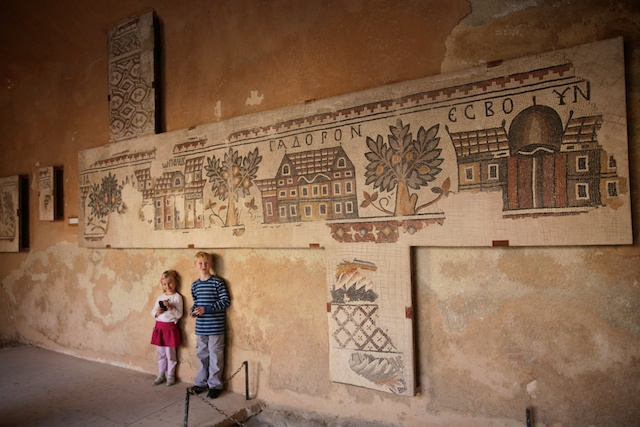
Other areas are still under study, but still accessible by visitors. Â This is the church and mansion — you walk around to see how under this huge mosaic were signs of the mansion that existed there before the church.
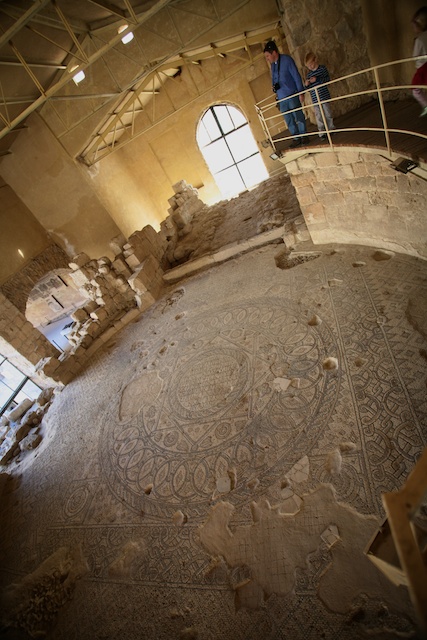
Incredible detail…
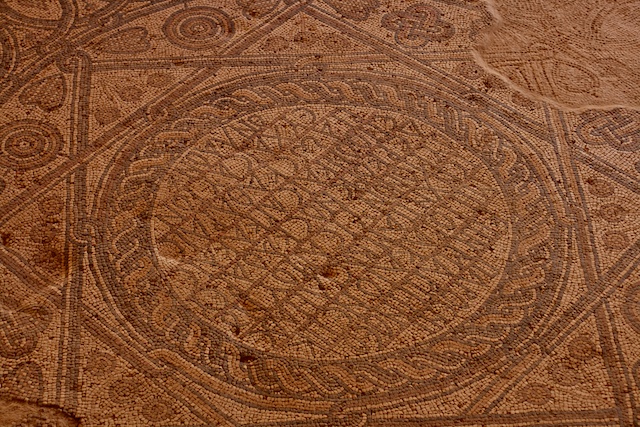
It’s hard to appreciate how impressive the mosaic is, as it’s so big, it’s hard to take in all the little symbols and stories held within the patterns.
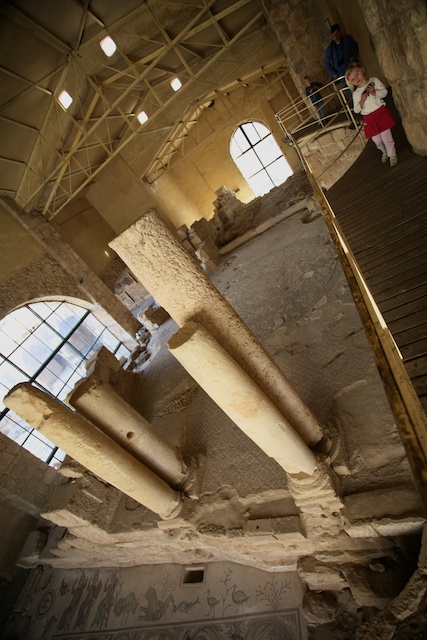
I think Will took this picture. Â Nice, huh?
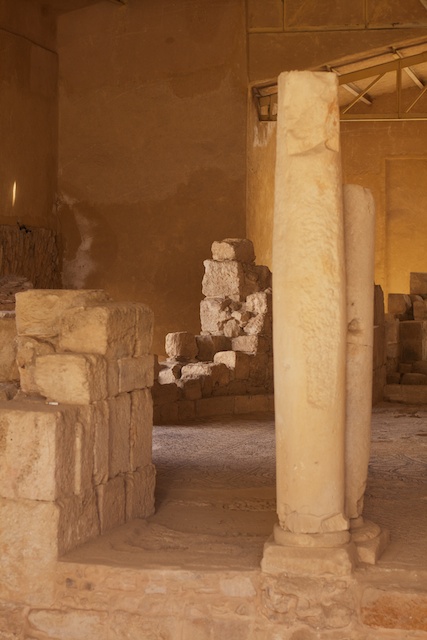
Give a kid a camera!
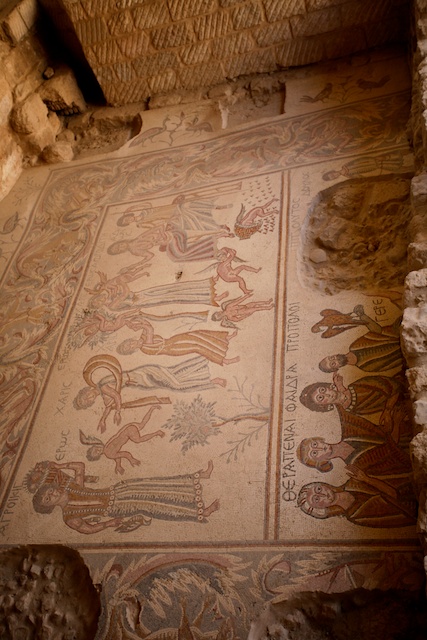
This entry way held an incredibly cool mosaic, showing seasons at the corners (the Goddess Cornucopia, with the trademark horn, with seasonal goods spilling out to show each season) and the story of Phaedra and Hippolytus in the center.
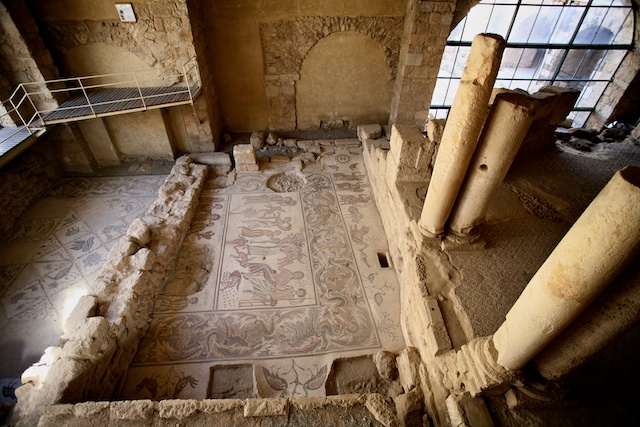
I totally tried to tell the kids the story, but reminded myself that I should be happy that they were interested without my getting all Greek-myth-crazy-geeky on them. Â Also, it’s a sad story. Â Do you remember it? Â Phaedra is married to Theseus (of the Minotaur fame) and because of some curse from Aphrodite, is made to fall in love with Theseus’s son, Hippolytus. (Not her own son, just her step-son.) Â It doesn’t end well. Â There are various endings, but Euripedes’ version has Theseus killing Hippolytus and then Phaedra committing suicide, which is sort of how all the others end, too, eventually. Â So it’s probably for the better that I didn’t force the kids to find the symbolism of the story in the mosaic.
From there, we ventured to the spot where most visitors to Madaba Bee-Line to upon entry into the town: St. George’s Church, or, the Church With THE MAP.
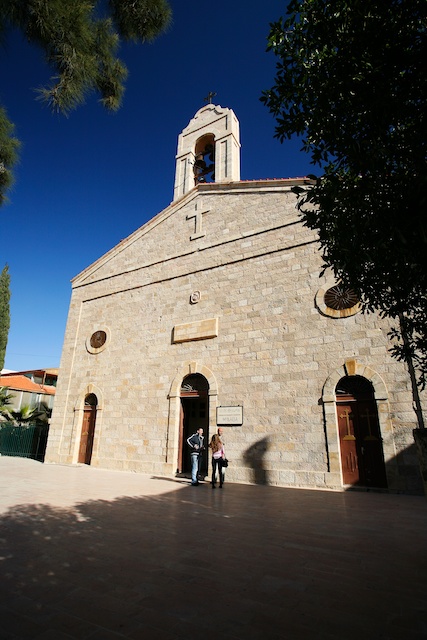
Here is a picture of the Church courtyard. Â It’s simply a lovely, lovely church in the center of the town.
By the way, 1/3 of the population of Madaba is Christian.  So this place is used regularly for services, as it has been for more than a millennia.
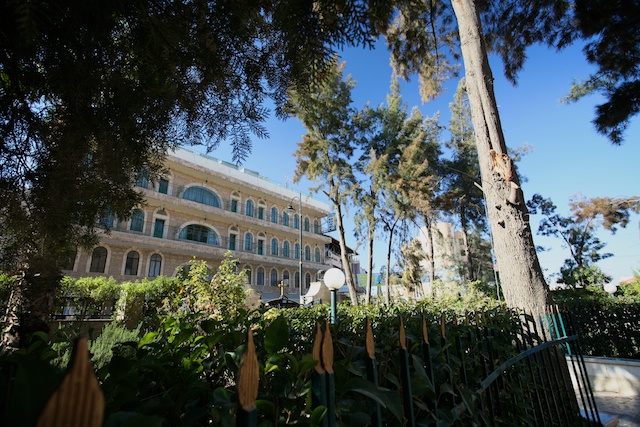
Here is the church. Â In the small but thoughtful and informative museum, there are photographs of this church in the middle of a barren hillside outside of the village proper dating back to the turn of the century. Â It’s as sweet and stately in those pictures as it is now… really a special place.
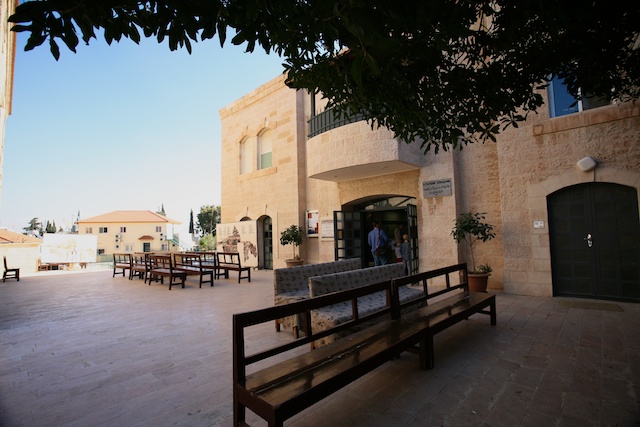
Here is the museum, where you go to pay your 1JD for entry. Â The guard has cousins in Florida and Detroit, just in case you get to chatting!
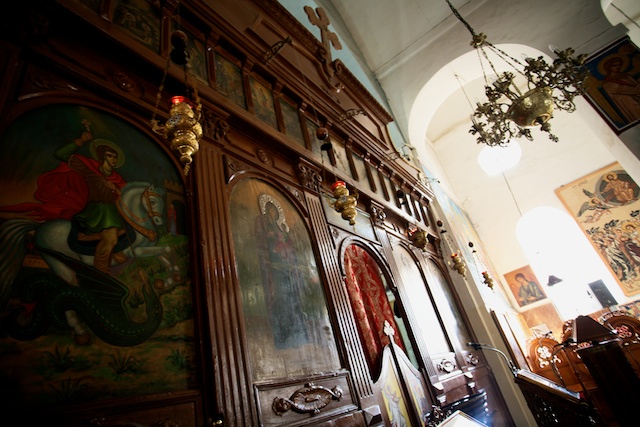
The inside feels much like going into an old European church.
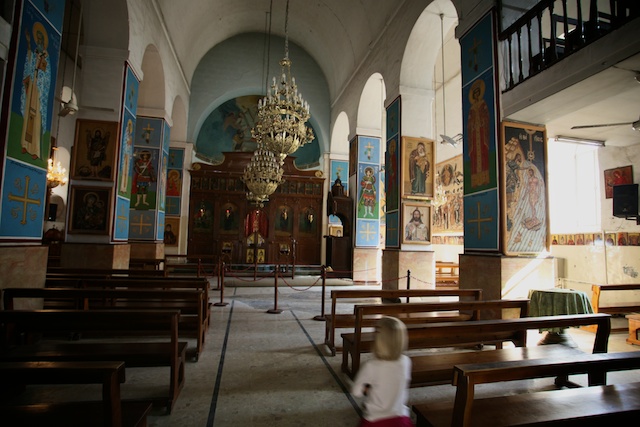
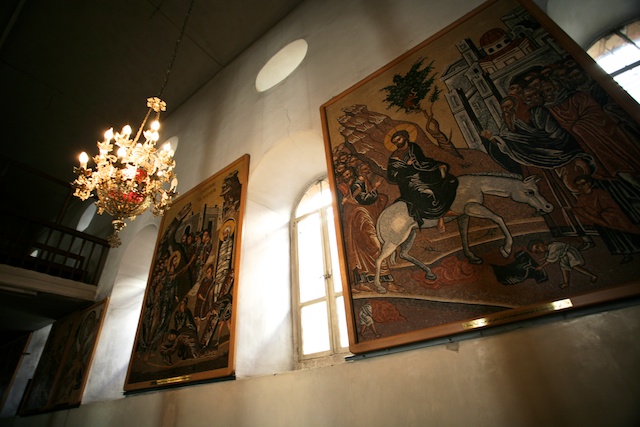
There are prayer candles burning (I couldn’t find candles for visitors, however) and the walls are lined with more modern mosaics and pews.
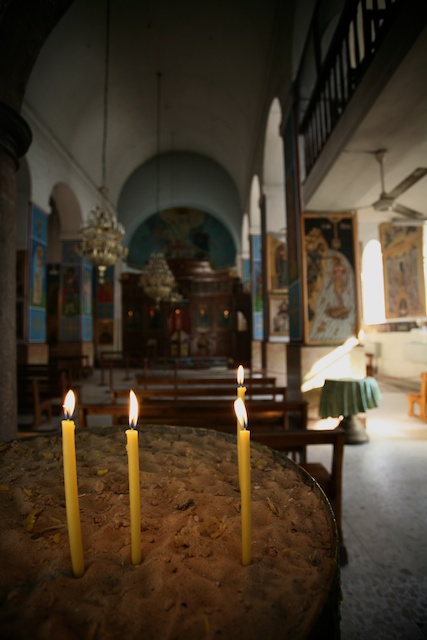
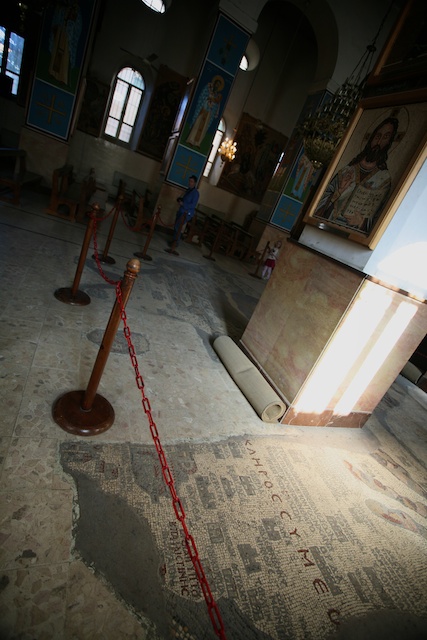
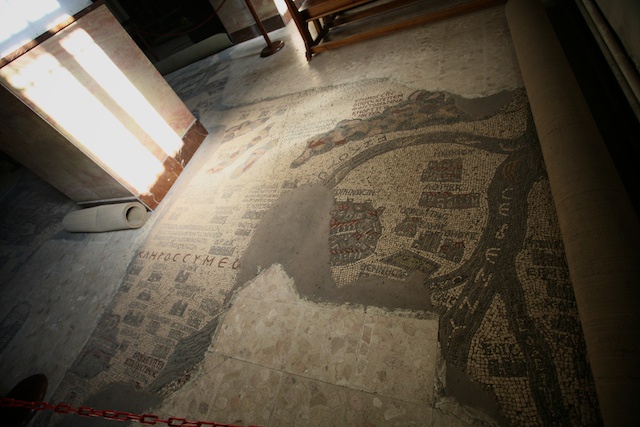
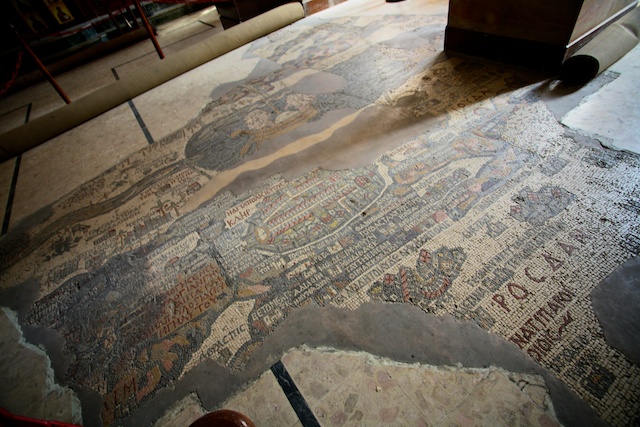
And then, right up by the nave, is the oldest map of the Holy Land. Â The one that scholars have used for the last 150 years to pinpoint just WHERE in the places in the Scriptures actually exist. Â Where IS Mount Nebo? Â Where is Sodom? Â Where was Christ born? Â These are the kinds of questions brought to this map. Â It’s the oldest map we have that charts out the places discussed in scripture. Â It’s been painted, reproduced, and photographed a million different ways, so while we won’t ever lose what information it there, it’s still a pretty cool mosaic in a pretty cool church.
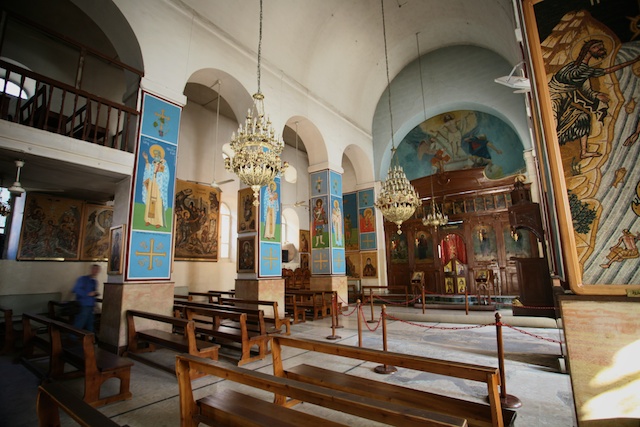
A very cute, very sweet church.
We really hope that the carpets are to protect the mosaic, and not to bring out the pews to set on top of it during services. Â (Right, right?)
The rest of the church is lovely, too. Â Madaba is worth a visit!
Amman, Jordan
Here is the most important thing to know about Jordan:
The people are among the friendliest in the world.
This is a good thing, because guidebooks? Â They bite. Â Perhaps there is some value in them for someone who is bouncing about like rock getting skimmed across the ocean, but for the person looking to dig in for more than a few hours? Â Not so much. Â For the information you need to live, to play, to figure out how to get water in your bathroom, and shades raised and lowered, and light the stove, and identify which number is taxi fare and which is distance, and pick out which carton represents milk from a cow and which from a camel — for these sorts of things, you must simply go out and ask others.
Preferably in Arabic.
In other words: we are having a great adventure in Jordan.
I spend workdays working in the office/clinic(s)/community center. Â Paul is with the kids. Â He brilliantly balances kids activities, his own work, and figuring out logistics (read list above, but add: mobile phone purchases, car rental, petrol station location, etc.) Â Here are some photos he took of our local digs.
The park a few blocks away where the kids go to play.
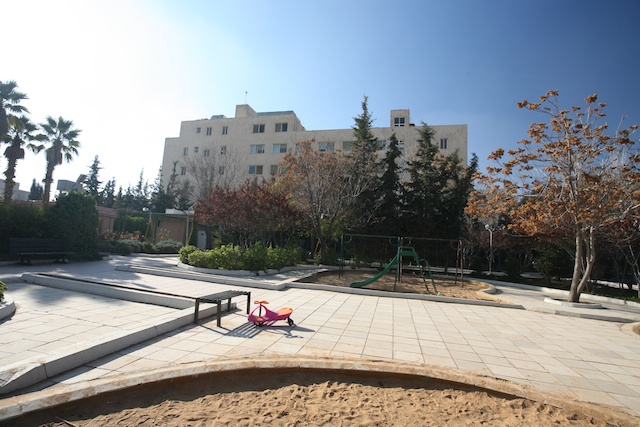
In this park, they’ve met other children, who, being Jordanian, are in the running for the title World’s Nicest Kids. Â Also being Jordanian, the kids speak to my kids in English, French, and if they can get my little Franco-American tots to comply, Arabic. Â One of reasons they have met lots of kids is because the park holds a soccer field:
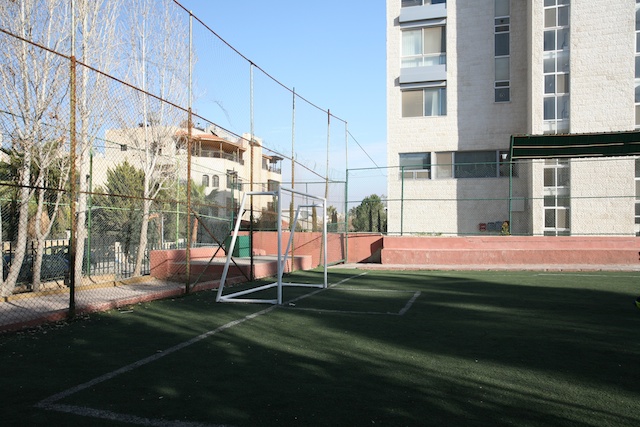
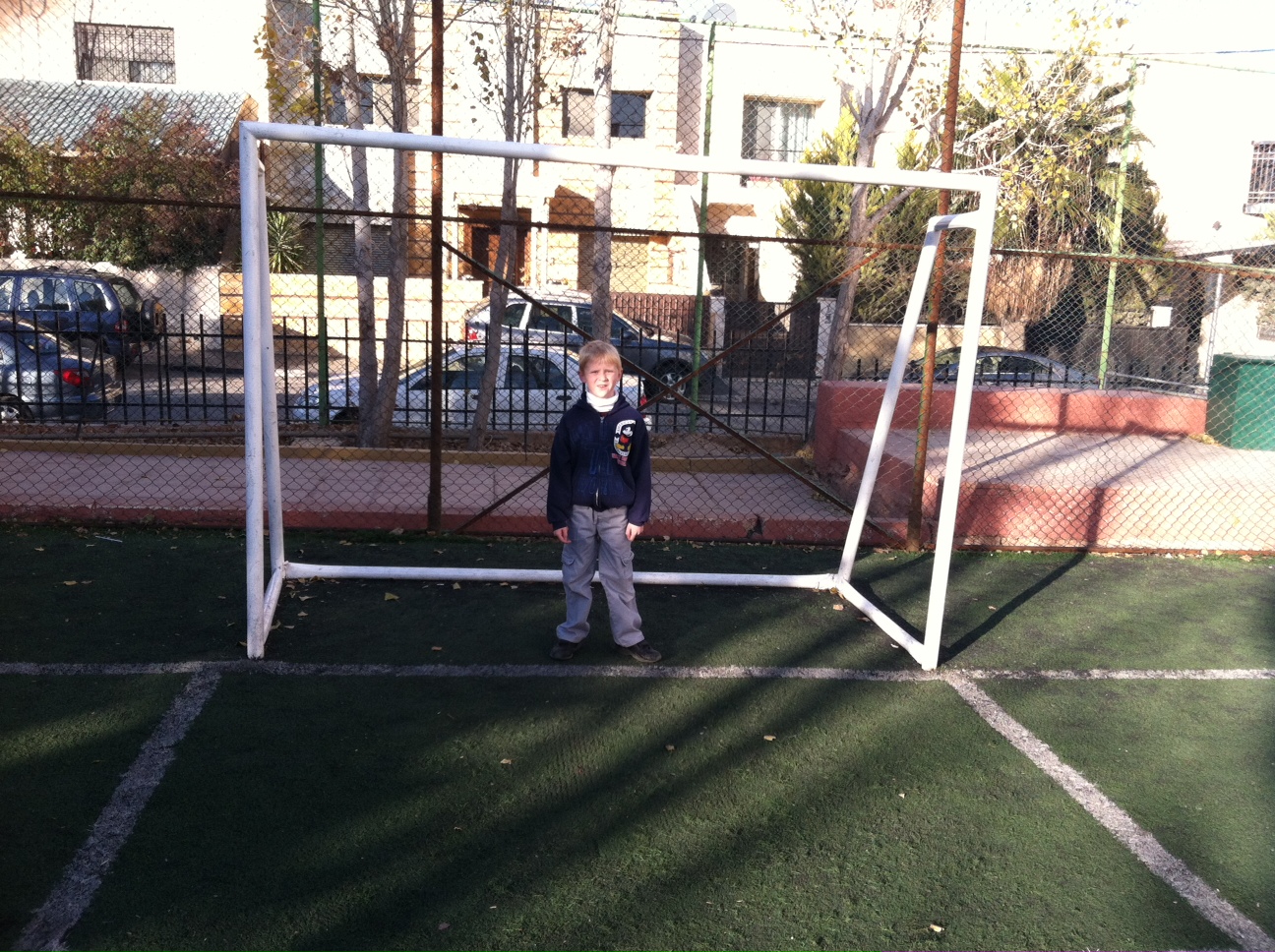
We picked up a soccer ball at a local mall. Â Ball + Will + Field in play park = KID MAGNET.
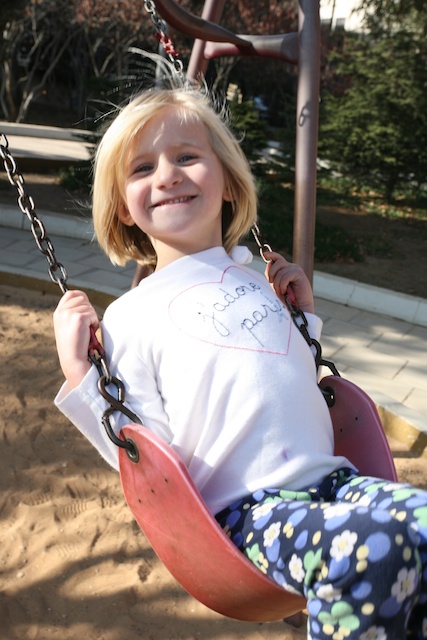
Kate likes the park, too!
This is our street. Â Like most English translations, the phonetics of Arabic mean that it’s possible to spell things in our alphabet several different ways. Â So, depending on where you enter, it could be Torrah Street. Â Or Turah Street. Â Or Tora Street.
A colleague also lives in the building and helps us immensely.
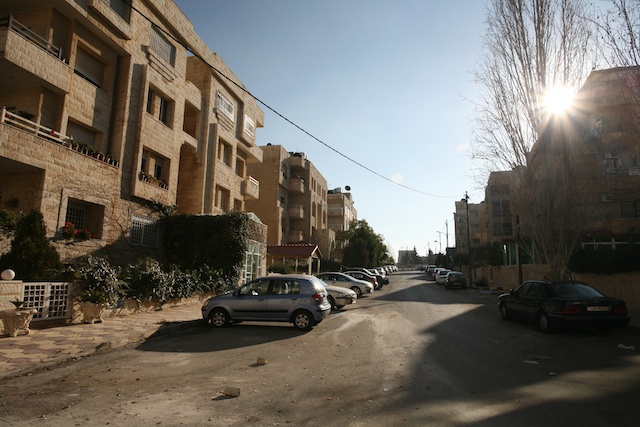
This is our building. Â If you were driving (and if you were anyone but a crazy American, this is what you would do… no one in Jordan walks!) you would pull in around the building to park underneath. Â A doorman lives by the parking spaces and acts as a maintenance/errand/assistant/helper/fix-it/late-night-entry guy. Â Everyone in the building pays him 30JD (JD = Jordanian Dinars; .70 cents USD = 1 JD) a month for these services. Â Our guy is super nice and we’d love to use his services more… if only our Arabic could express more than our names, thank you, and my personal favorite “sema azara” (blue sky).
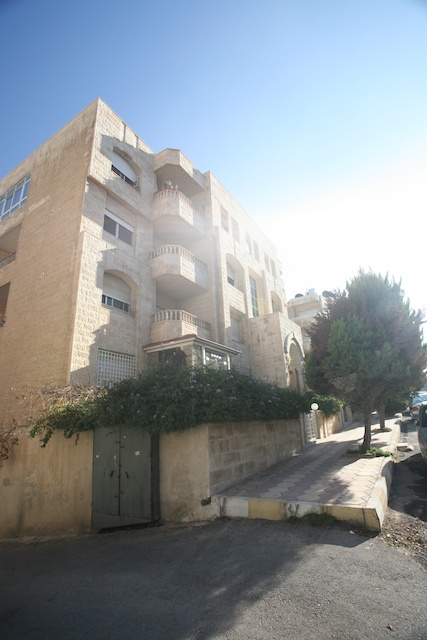
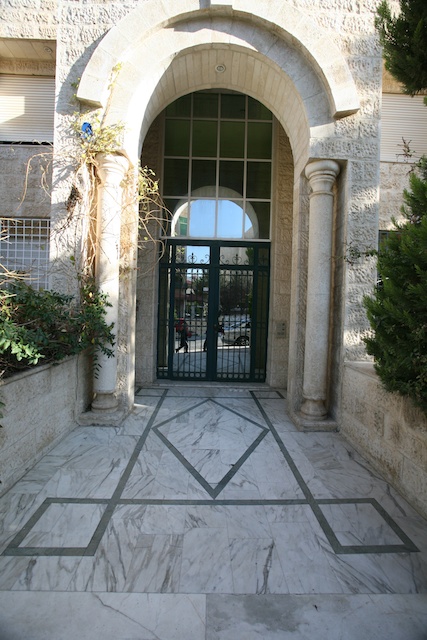
And here is our front door. Â Welcome to our Jordanian home!
Adventures that I had (will age 8)
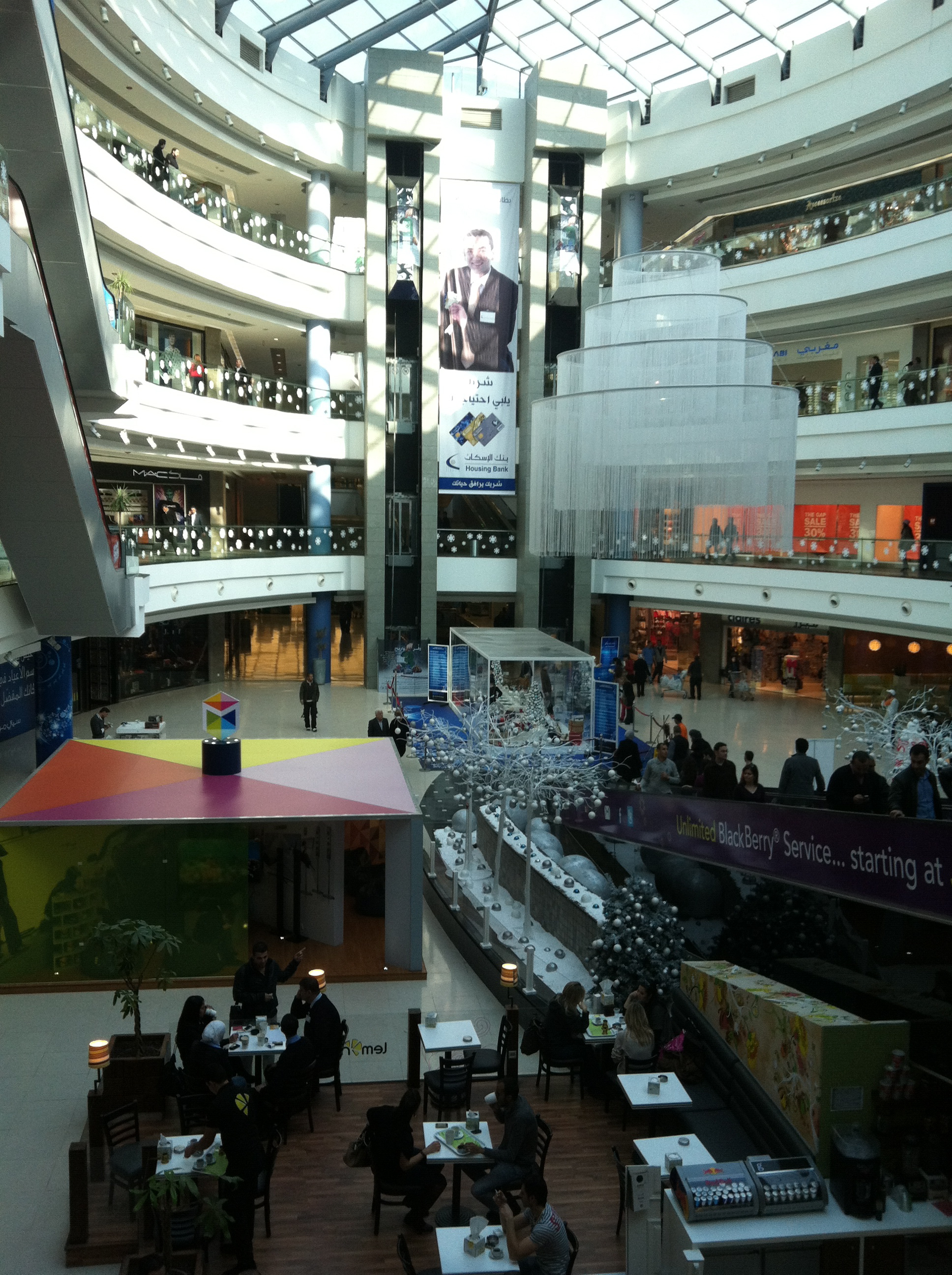
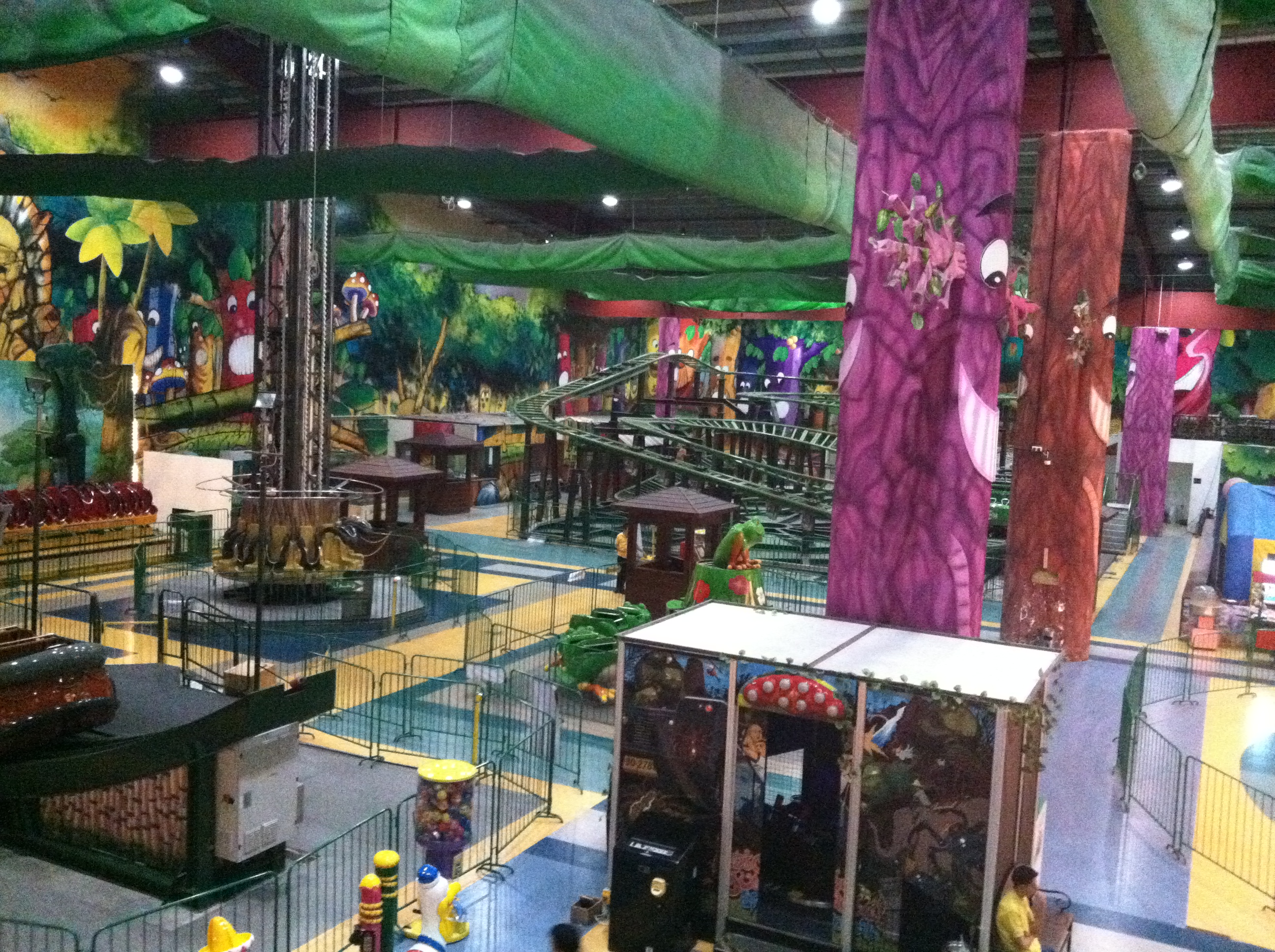
Today I had a great adventure at City Mall in Jordan. The first thing I did was looking at toys and then we went to Jingo’s Jungle . Â Jingo’s Jungle is a place for kids there are rides & arcades to do.
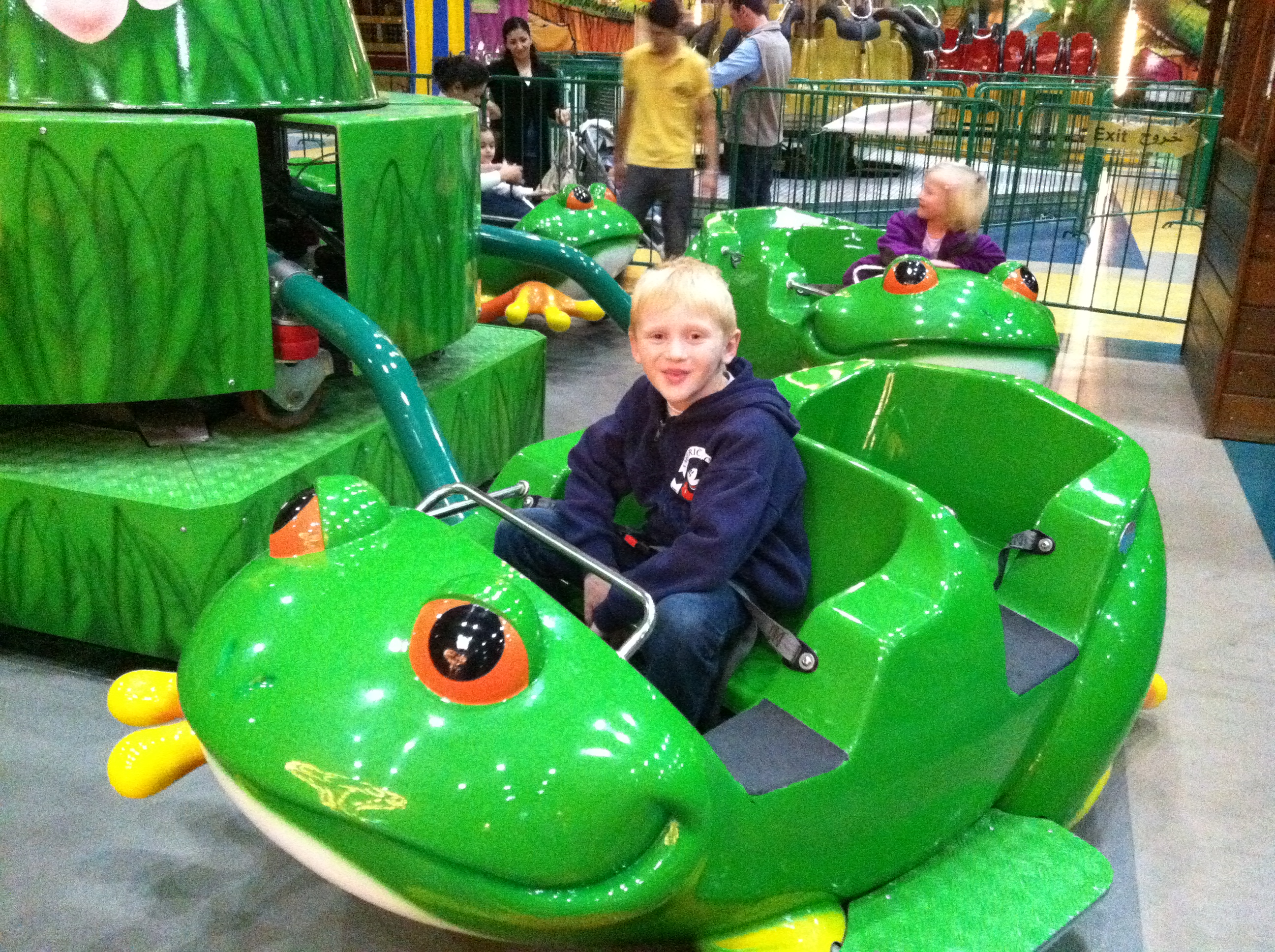
At last we went to get my dad a phone.  What an adventure we had.
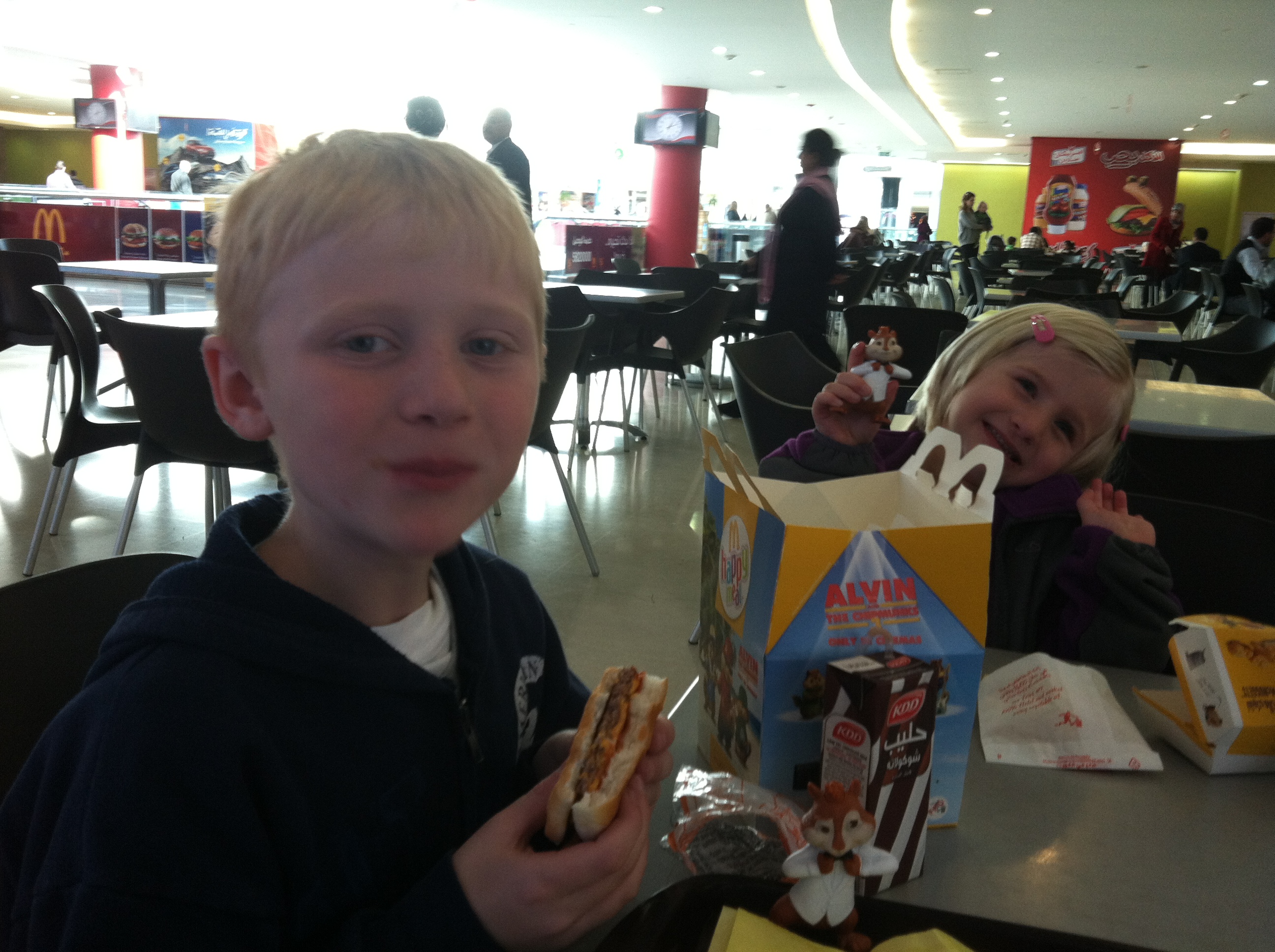
During lunch we had MC.Donalds it’s food is way different than MC.Donalds here in the U. S.The hamburgers are beef or chicken.
days in Jordan (by will age 8)
Jordan is very dry.The people here are really nice.My favorit thing is the kids there.The kids are really nice & they are also pelite. My 2 and favorite is the park & the soccer field there.
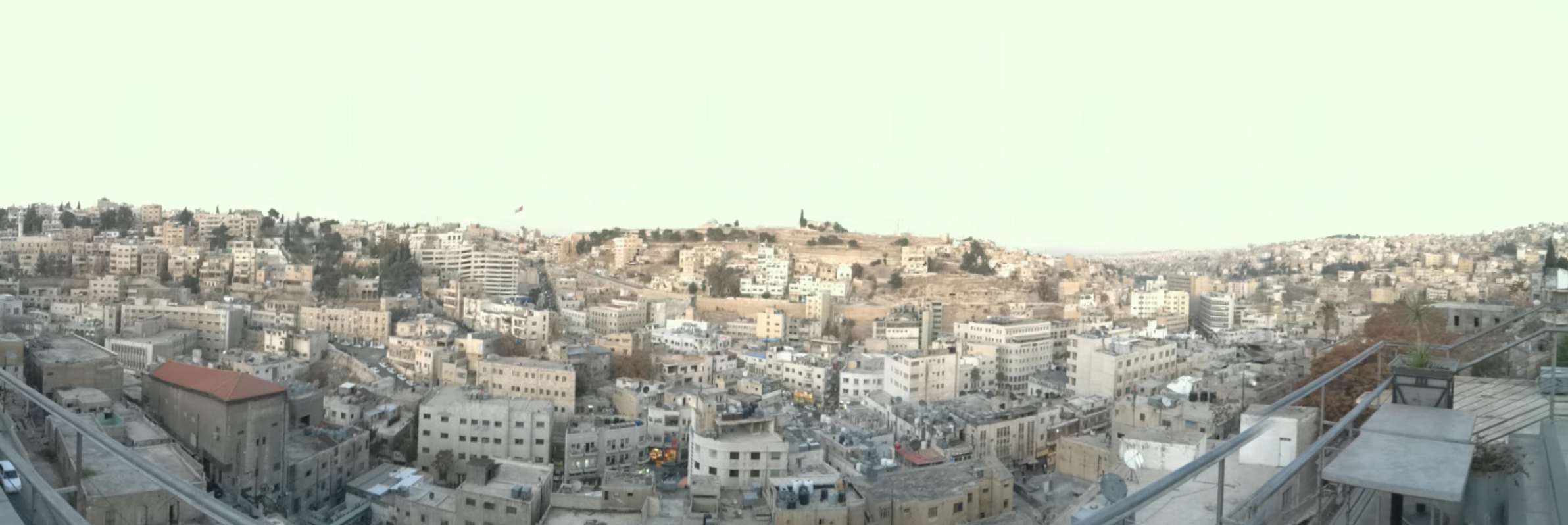
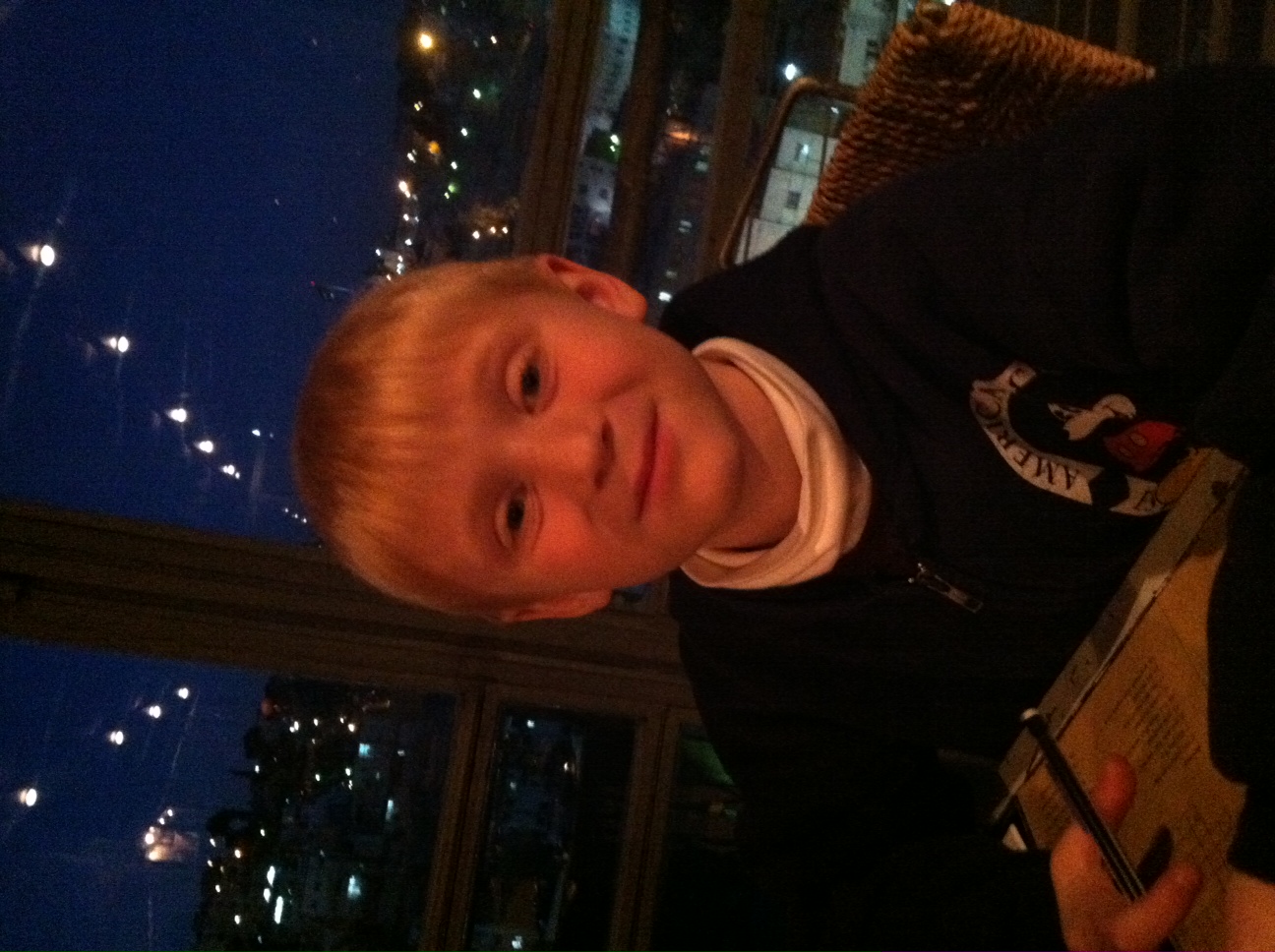
My 3 rd favorite is at the restaurant called wild Jordan if you look out the window you will see roman ruins.
things that I did in jordan (by Will, age 8)
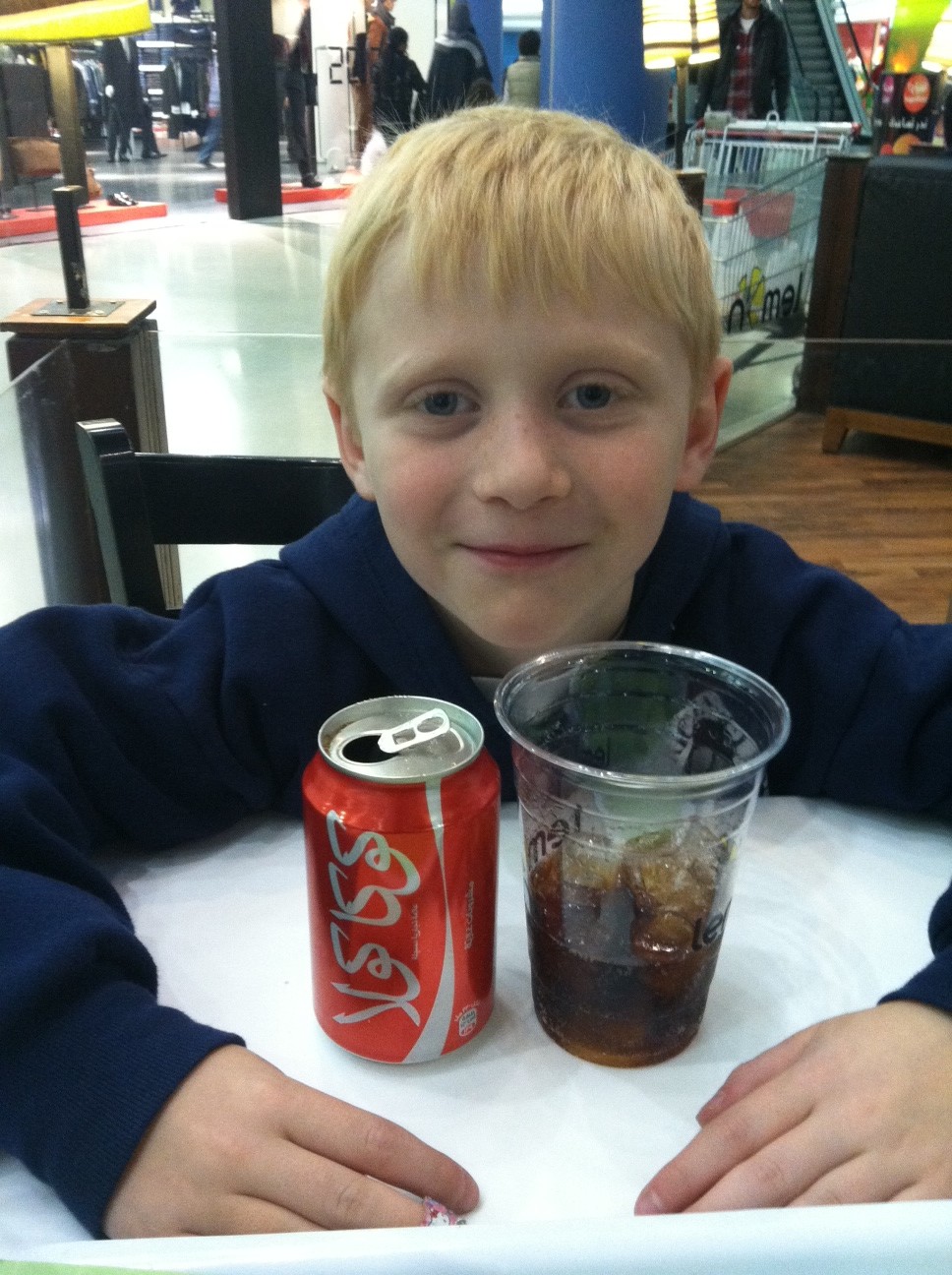
I am siting by a bottle of coca – cola.because I was  tired at the city mall in jordan.  We were at the city mall in jordan because my mother wanted to shop for groceries & other things like towels.
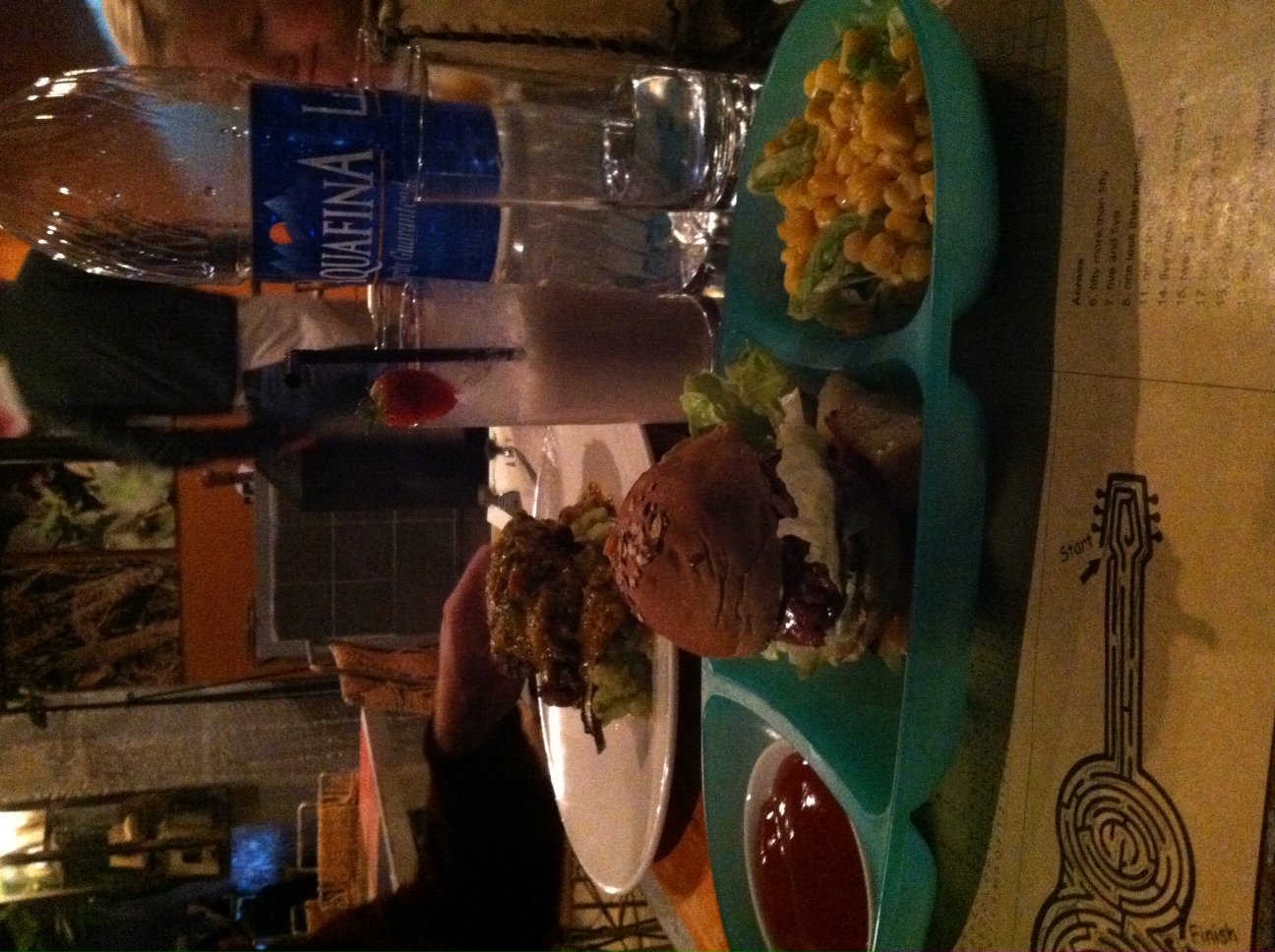
I hade diner at a restaurant  called Willed  jordan & the restaurant saved money to save the animals.All the food there was
excellent & the smoothy  that I hade was great.
Bringing it back from the dead
The hiatus has lasted almost exactly one year. Â The 366 days of silence come back? Â A bit longer than Lazarus, but perhaps not in vain — for my son, the first born, the-one-who-was-8-months-old-when-this-blog-was-started-and-is-now-8-years-old, The Little Man* (*TLM) himself is entering the blogging world.
The story goes like this: we’re in Amman, Jordan for a few weeks for work and Will is blogging as part of his school work during the trip. Â I’ll tag (WillsBlog, Jordan) and categorize (Will’s Blog) his posts accordingly. Â Further, I will boost my attempts to get the blog redesigned, updated, and restored to a long-lost former glory. Â Arshook and Shukram!